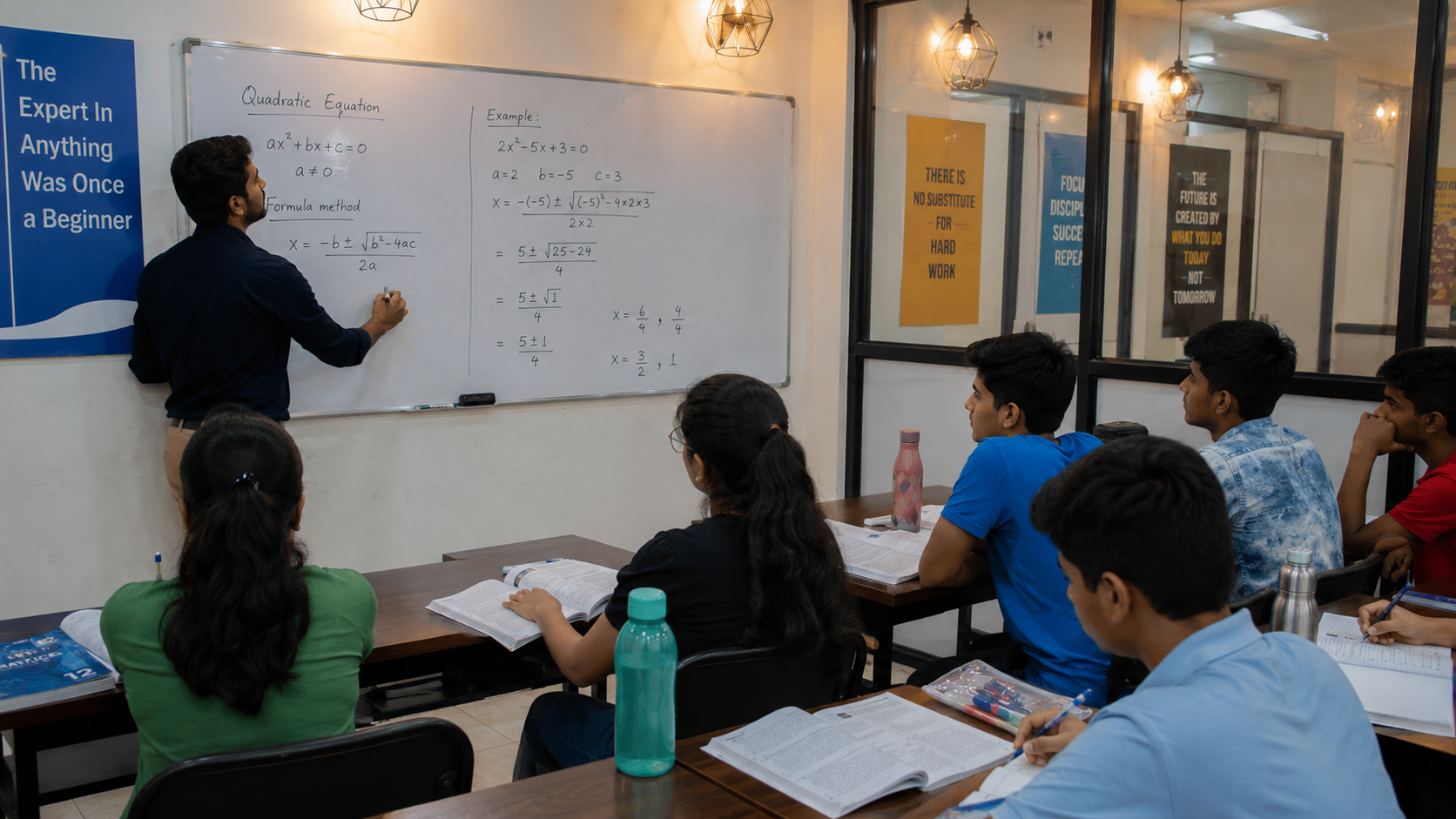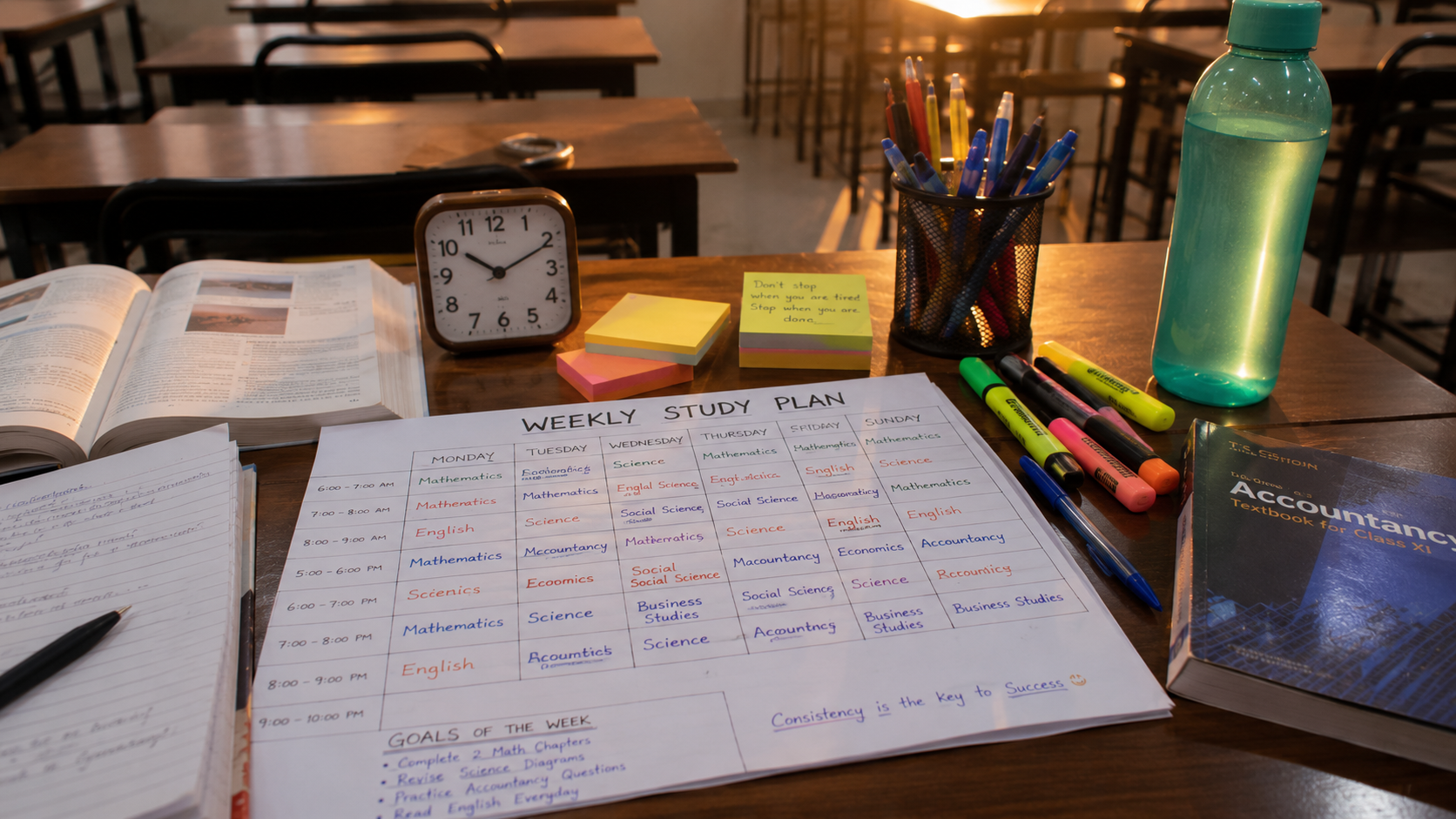
Parents in Dwarka who are considering coaching for a Class 6 student often face a common doubt: is this too early? Is the child not handling things fine already? Won't coaching add unnecessary pressure at a young age?
These are reasonable concerns. But they are based on a premise that deserves examination: that Class 6 is still "early" in the same way Class 3 or 4 was. It is not. Class 6 is the beginning of secondary school in the CBSE structure — and it introduces a set of demands that are qualitatively different from Class 5.
What Changes at Class 6 in CBSE
At Class 5, most CBSE subjects can be managed with attentiveness in class and memory at home. A student who listens in school and reads their textbook before a test can do well in most Class 5 subjects without structured study habits or additional support.
Class 6 introduces three shifts that make this approach less reliable:
- Maths moves from arithmetic to algebra. Class 6 introduces integers, algebraic expressions, and the concept of unknown variables. These require a different type of thinking — not harder arithmetic, but a different category of reasoning. A student who is confused by the first algebra chapter in Class 6 Maths carries that confusion into Class 7, 8, and eventually into the linear equations and polynomial chapters of Class 9.
- Science splits into three disciplines. In Class 6, Science begins to cover Physics concepts (motion, force), Chemistry concepts (materials, changes), and Biology concepts (life processes, classification) simultaneously. A student who was fine with Class 5 Science's descriptive, observation-based content may need support adjusting to the more systematic, classification-based approach of Class 6.
- Study habit formation becomes important. Class 5 students typically do well by completing homework and being engaged in class. From Class 6 onwards, self-directed revision — reading a chapter again before a test, maintaining consistent notes, completing practice problems independently — becomes necessary. This is a skill that needs to be built, not assumed.
The Compounding Advantage: How Class 6 Support Pays Off by Class 10
The reason starting coaching support in Class 6 creates a compounding advantage is not complicated: CBSE subjects are built in sequences. Algebra in Class 6 → Algebraic expressions in Class 7 → Factorisation in Class 8 → Polynomials and coordinate geometry in Class 9 → Advanced algebra in Class 10. A student with a solid understanding of Class 6 algebra approaches each subsequent class with a foundation already in place. A student with gaps in Class 6 algebra begins each subsequent class already at a partial deficit.
This is not theoretical — it is visible in coaching outcomes. Students who begin coaching in Class 6 and maintain it through Class 10 rarely need intensive remedial support before boards, because their foundational understanding across the chapter sequence is solid. Students who begin coaching for the first time in Class 10 often need the first month to address Class 8 and 9 conceptual gaps before they can start board exam preparation itself.
What Class 6 Coaching in Dwarka Should Actually Look Like
Class 6 coaching should be different from Class 10 coaching in tone, pace, and approach. The goal in Class 6 is not board exam preparation — it is conceptual clarity on new topics, consistent note-keeping habits, and familiarity with how CBSE structures questions (including the new activity-first approach of the NCF-aligned NCERT textbooks for Classes 6 and 7).
A coaching centre that treats Class 6 students like junior Class 10 students — pressure, extensive test papers, excessive homework — is likely not serving them well. The right coaching for Class 6 supports understanding, encourages curiosity about new concepts, and establishes systematic habits without creating anxiety.
At Expert Tutorials, our Class 6 coaching uses the new NCF-SE aligned NCERT textbooks for 2026–27, focuses on conceptual understanding of new topics (especially algebraic thinking and systematic Science reasoning), and maintains the expectation of regular — but not excessive — practice and note review.
When Class 6 Coaching Is Not the Right Move
There are situations where Class 6 coaching is not the right decision, and it is worth being honest about them:
- If the child is already performing confidently in Class 5 and shows natural aptitude for independent learning and subject engagement, additional coaching may not be necessary yet — and could reduce the space for independent exploration that confident learners benefit from.
- If the child is already managing 5–6 hours of daily structured activity (school, homework, extracurriculars), adding coaching without restructuring the schedule may create fatigue rather than benefit.
- If the parent's primary motivation is status or peer pressure rather than an observed learning need, this is worth reflecting on. Coaching works best when it is addressing a specific gap or supporting a student who is at risk of falling behind — not as a default for all students.
Frequently Asked Questions
Know a Dwarka parent with a child entering Class 6? Share this.