If you are a Class 11 Commerce student in Dwarka with DU on your radar — B.Com (H) at SRCC or Hansraj, Economics (H) at LSR or Miranda, BBA at Shaheed Sukhdev — you are going to sit CUET in May 2027. This guide explains what that means, how to prepare, and what to do in Class 11 versus what to do in Class 12.
What CUET Actually Tests
CUET (Common University Entrance Test) replaced merit-based DU admissions. Class 12 board percentage no longer determines DU admission — CUET score does. The exam is typically held in May, three weeks before Class 12 board results are declared.
For Commerce students, CUET has two main components:
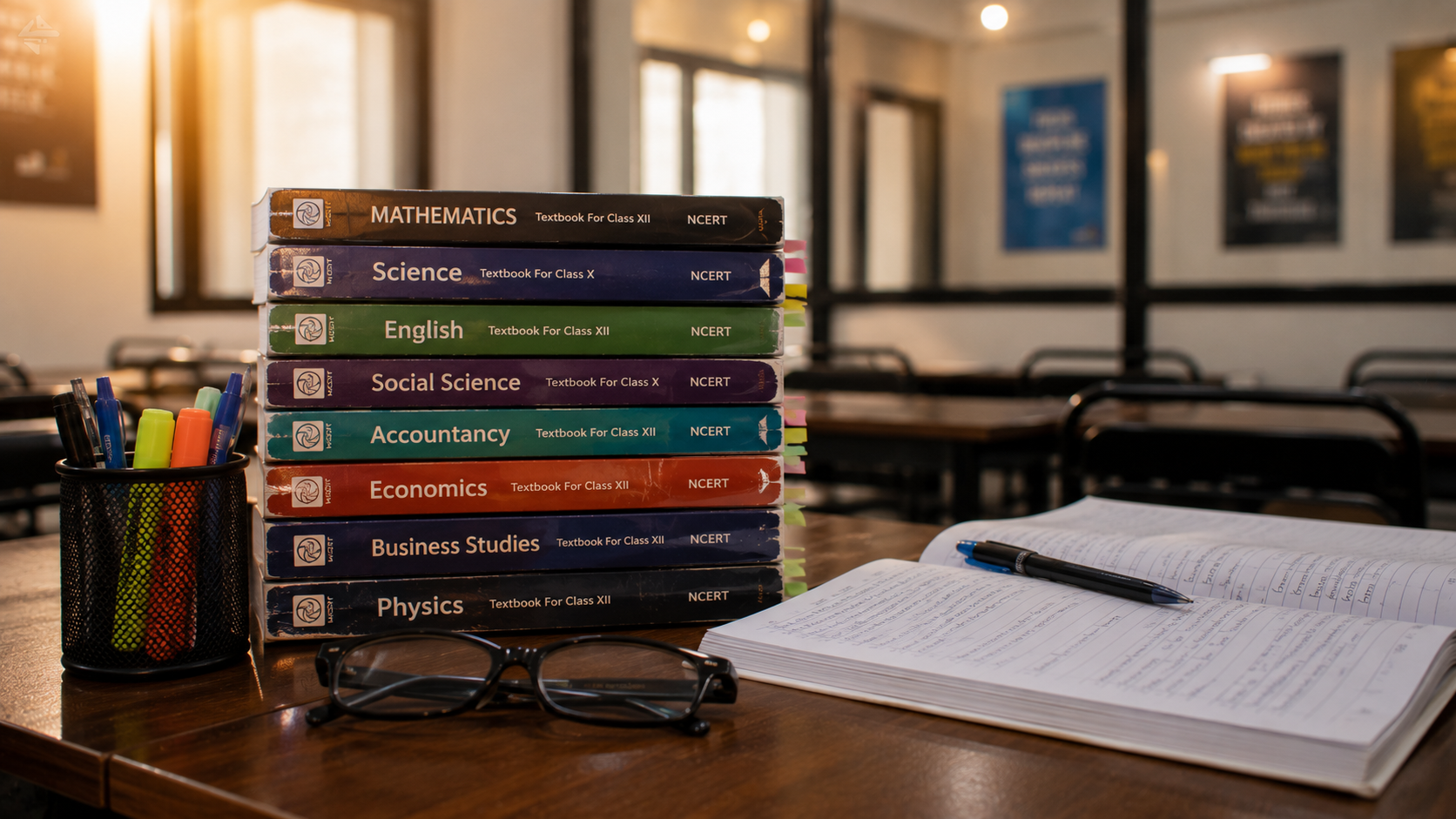
- Section II — Domain subjects: You choose domain subject papers from the Class 12 NCERT syllabus. Commerce students targeting B.Com (H) typically appear in Accountancy, Business Studies, and Economics domain papers. Each paper is 50 MCQs in 60 minutes with negative marking (−1 for wrong answers in most papers).
- Section III — General Test: 60 MCQs in 60 minutes covering quantitative reasoning, logical and analytical reasoning, and general knowledge. Required for BBA programmes and recommended for B.Com (H) at several DU colleges.
The domain subject papers test the same content as CBSE Class 12 boards — but entirely in MCQ format. The concepts are the same; the examination format is completely different.
What to Do in Class 11: Foundation First
The most important thing a Class 11 student can do for CUET 2027 is build genuine conceptual understanding in all three Commerce subjects — not attempt CUET-specific practice on Class 12 content they haven't studied yet.
Here is the logic: CUET domain subject papers test Class 12 NCERT content. That content builds on Class 11 foundations. Students who have weak Class 11 foundations — unclear on trial balance, unclear on microeconomic diagrams, unclear on basic BST frameworks — spend a large portion of Class 12 relearning foundational material rather than advancing and revising. By the time they are ready to do CUET MCQ practice, they have limited months.
What Class 11 students should focus on:
- Accountancy: Master double-entry bookkeeping, journal entries, ledger, trial balance, and final accounts completely. Class 12 Accountancy (partnership, company accounts) builds directly on Class 11 fundamentals. Gaps here become very expensive in Class 12.
- Economics: Build conceptual clarity on all Class 11 Micro and Statistics chapters. CUET Economics MCQs test concepts across both Class 11 and Class 12 Economics — Class 11 demand-supply diagrams and elasticity concepts appear in CUET.
- Business Studies: Read the NCERT textbook thoroughly and understand each chapter rather than memorising. BST CUET MCQs often test applied understanding — identifying which management principle applies to a scenario — not just definitions.
What to Do in Class 12: CUET Preparation Timeline
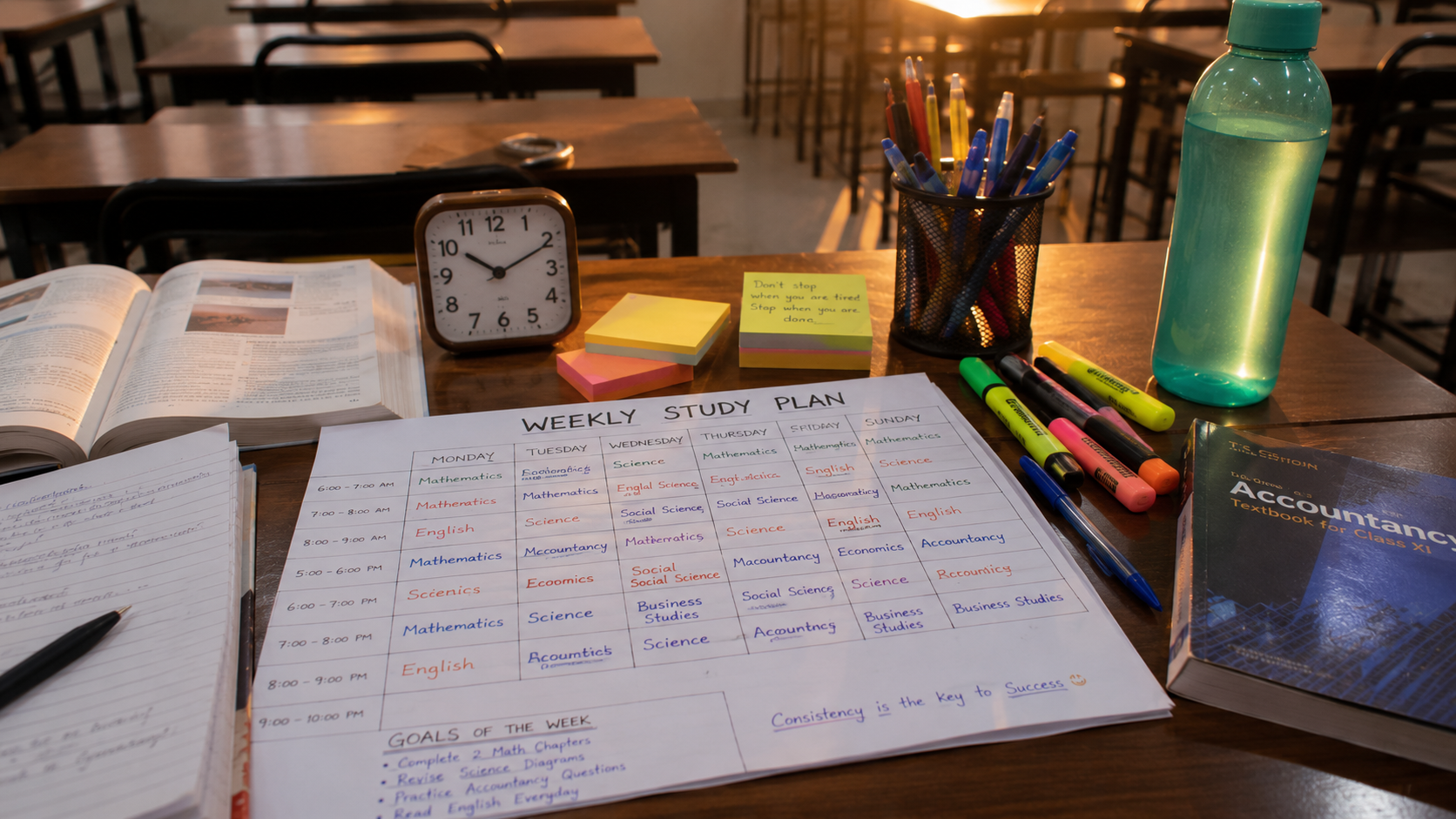
In Class 12, CUET-specific preparation should begin alongside — not instead of — board preparation. The domain subject content is the same; the additional work is MCQ format practice.
April to October (early Class 12)
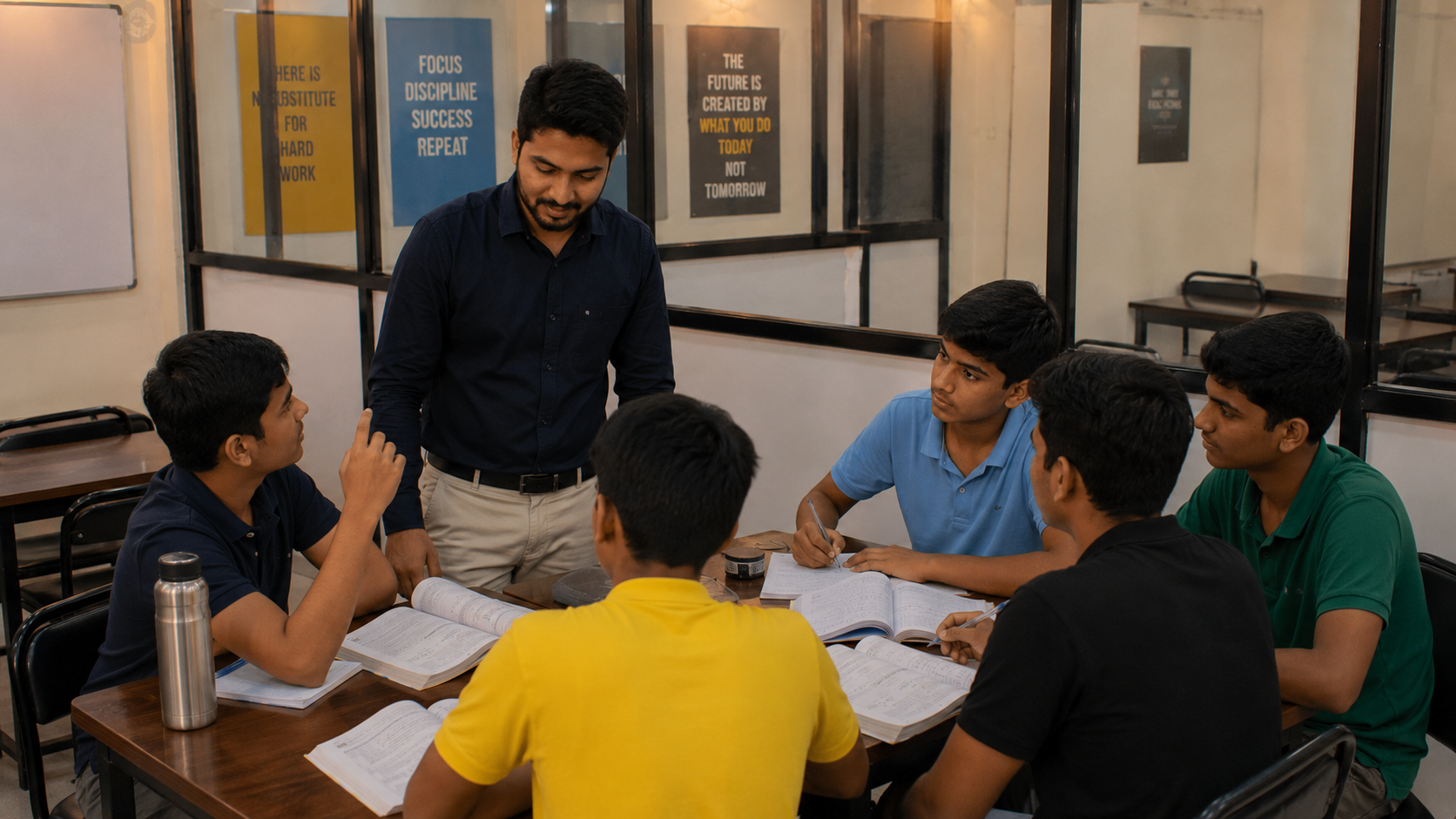
Cover Class 12 syllabus completely through coaching. At Expert Tutorials, our Class 12 teaching pace is designed to complete the full syllabus by October — giving students time for both board revision and CUET practice before May. Students who have strong Class 11 foundations typically find Class 12 content progression faster.
November to January (mid Class 12)
Begin CUET domain subject MCQ practice alongside board revision. The two are complementary: understanding a concept deeply enough to answer board long-answer questions also makes you capable of answering MCQs accurately. The additional CUET-specific work is learning to read and answer MCQs quickly, and learning when to skip uncertain questions (negative marking).
January to March (pre-board period)
Board preparation dominates. CUET General Test preparation runs in parallel — 30–45 minutes daily on quantitative reasoning and logical reasoning exercises. GK sections require consistent exposure over months, not last-minute cramming.
Post-boards (March–May)
Boards end. Full focus shifts to CUET. This is when students do full-length timed CUET mock tests and refinement. Students who have maintained consistent Class 12 preparation find these final 6–8 weeks sufficient for CUET readiness.
CUET from Dwarka: What to Know
For students in Dwarka and West Delhi, DU college priorities typically run: SRCC (B.Com H), Hansraj (B.Com H and Economics H), Venkateshwara (B.Com H), Deshbandhu, Maharaja Agrasen College, Delhi College of Arts and Commerce. Cut-offs at each college are determined by CUET score percentile, not by marks — so relative performance against other Commerce students sitting the same paper determines your college.
CUET scores are normalised across sessions, so the exact cut-off marks change each year. What matters is rank within the Commerce student pool sitting domain subject papers, not a fixed marks target. This means comprehensive subject preparation — not just individual chapter focus — is the right strategy.
Frequently Asked Questions
Found this useful? Share it.