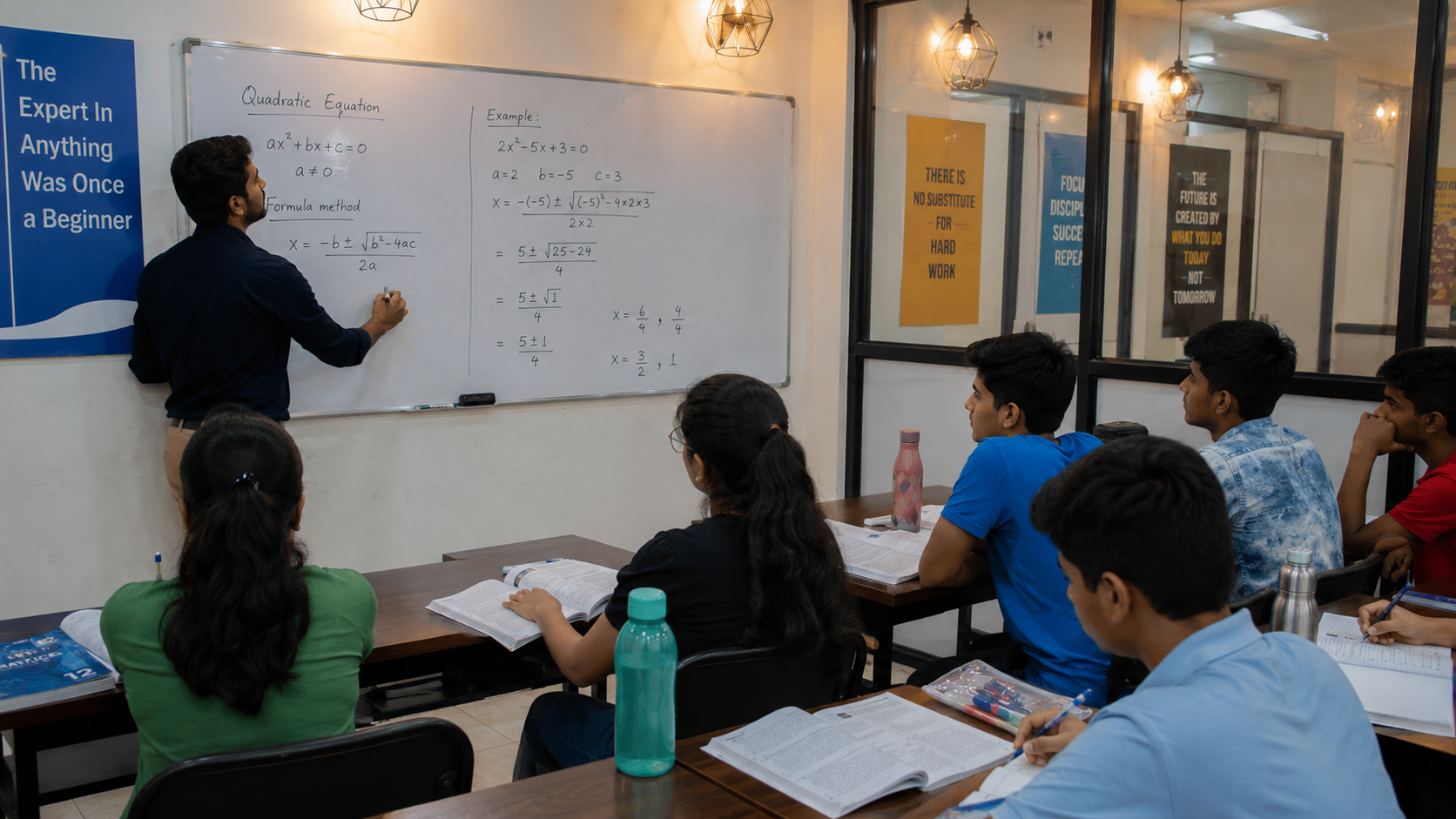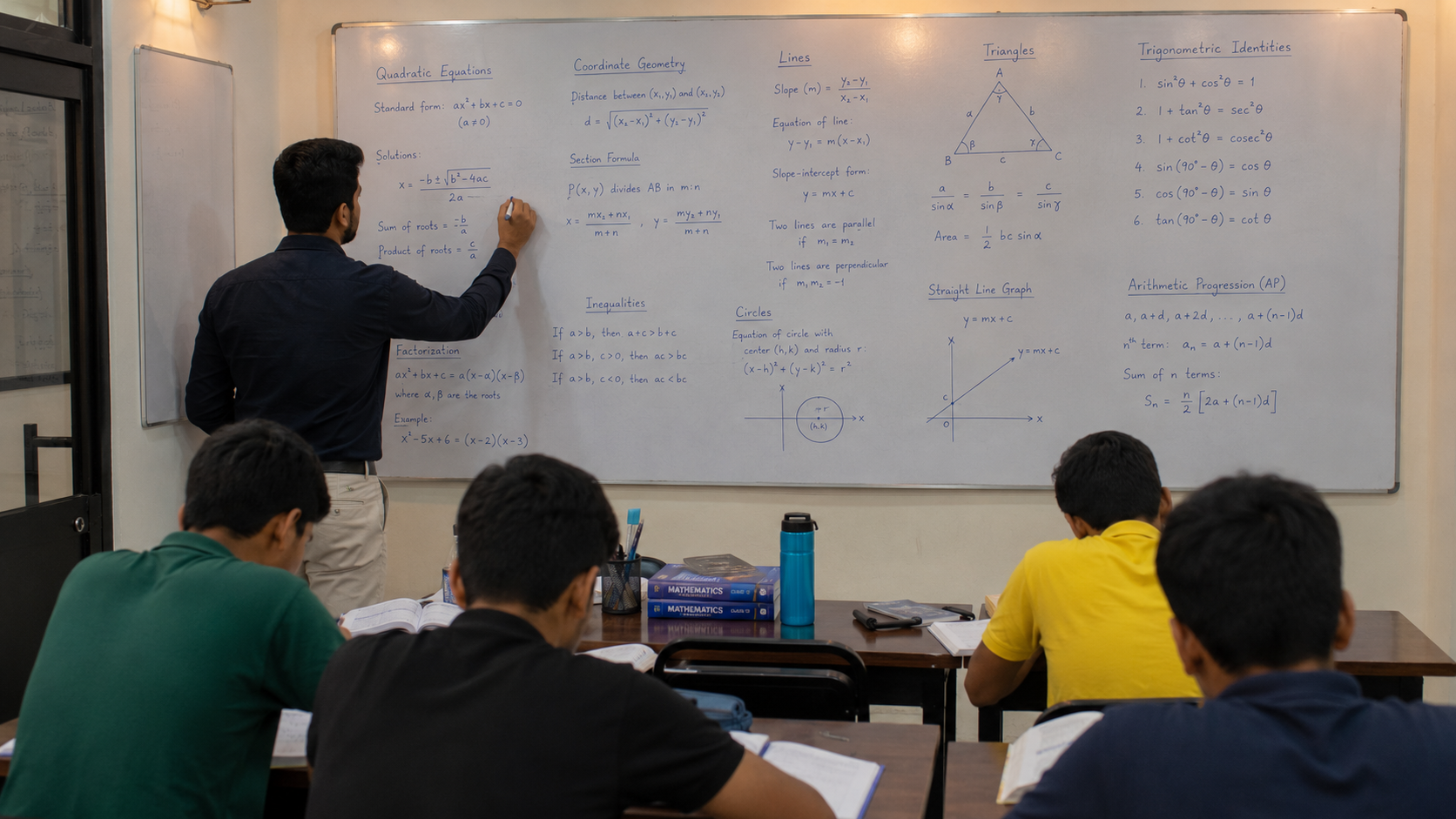
Parents in Dwarka often ask the same question: how do I know when my child actually needs outside coaching support versus when I should encourage them to manage on their own? The honest answer is that the decision is different for every child — but there are specific, observable signals that indicate when a child is genuinely falling behind in a way that school alone cannot address.
These are not things to guess at. They are patterns you can observe at home and verify with the school. Here are five of them.
Sign 1: Periodic Test Scores Are Declining Across Multiple Subjects
A single bad test in one subject is usually not a signal — it can be an off day, a difficult paper, or a topic that did not land well. But when periodic test scores are declining in two or more subjects across consecutive tests, this is a pattern that indicates a structural gap rather than a one-off event.
In CBSE Class 9 and 10, periodic tests happen 2–3 times per term. A decline across the first two tests of a term in both Maths and Science is a strong signal that the foundational understanding from the previous class has gaps that are now showing up. The longer this pattern continues without intervention, the harder it becomes to close the gap — because each new chapter in CBSE builds on the previous one.
Sign 2: Your Child Cannot Explain What They Studied in School That Day
This is a simple daily test parents can do: ask your child in the evening what they learned in school today. Not "how was school" — that always gets a non-answer — but "what topic did you cover in Maths today? Can you explain it to me?"
A child who genuinely understood a topic in class can give a rough explanation of it. A child who sat through a class without understanding — or who lost track halfway through — cannot. The inability to explain recently taught content, consistently, across subjects, indicates that school classroom delivery is not landing at the understanding level for that child. This is a gap that coaching — with smaller groups and more individual interaction — often addresses effectively.
Sign 3: Homework Takes Significantly Longer Than It Should
Every parent who has sat with a child struggling over homework knows this pattern: what should take 30 minutes takes 2 hours, with repeated restarts, frustration, and ultimately incomplete work. This happens when a child does not have the conceptual foundation to attempt the homework independently — not when the work is simply hard.
The distinction matters. Hard homework takes effort but makes progress. Homework being attempted without the conceptual foundation keeps producing wrong answers and dead ends that no amount of effort resolves. If your child is spending more than twice the expected time on homework for a subject regularly, and the homework is not being completed correctly, this is a sign of a conceptual gap that needs addressing.
Sign 4: Your Child Expresses Anxiety or Avoidance Around a Specific Subject
Children who are genuinely behind in a subject often develop avoidance behaviour: delaying starting homework for that subject, claiming "it's fine" when asked, losing the textbook or notes more frequently than other subjects, and expressing disproportionate anxiety before tests in that subject.
This is not a motivation or attitude problem — it is usually a signal that the child does not feel capable of succeeding in that subject and is avoiding the discomfort of confronting that. The appropriate response is not encouragement alone, but addressing the conceptual gap that is generating the anxiety. A student who begins to understand previously confusing material typically shows a noticeable improvement in attitude toward that subject, not just in marks.
Sign 5: School-Level Preparation Is Not Enough for the Upcoming Class
Some parents notice this sign in advance rather than in reaction to already-declining scores: the upcoming class (Class 9 from Class 8, or Class 11 from Class 10) is significantly more demanding than the current one, and their child's current preparation level does not suggest they will transition smoothly.
The Class 8 to Class 9 transition in CBSE is the most significant jump in the school career for Maths and Science. The Class 10 to Class 11 Commerce transition is the most significant jump for students choosing Commerce. Parents who are aware of these transitions and see that their child is managing Class 8 or Class 10 adequately but not with significant margin are often right to set up coaching support before the transition rather than after difficulty has already set in.
Frequently Asked Questions
Found this useful? Share it.