Dwarka has dozens of CBSE coaching centres across Sectors 3, 6, 7, 8, 9, 10, 11, 12, and 13. Many make similar claims — experienced faculty, excellent results, personalised attention. The question every parent faces is how to distinguish substance from marketing.
These 7 questions are designed to do exactly that. They are grounded in what actually determines coaching quality — not proximity, not fees, not reputation alone. Ask them directly, and pay attention to how confidently and specifically the centre answers.
This is the single most important question to ask, and it must be specific. "Small batches" is a claim made by nearly every coaching centre. The number that matters is the current enrolment in the specific batch your child would join — by subject, by class, at the timing they would attend.
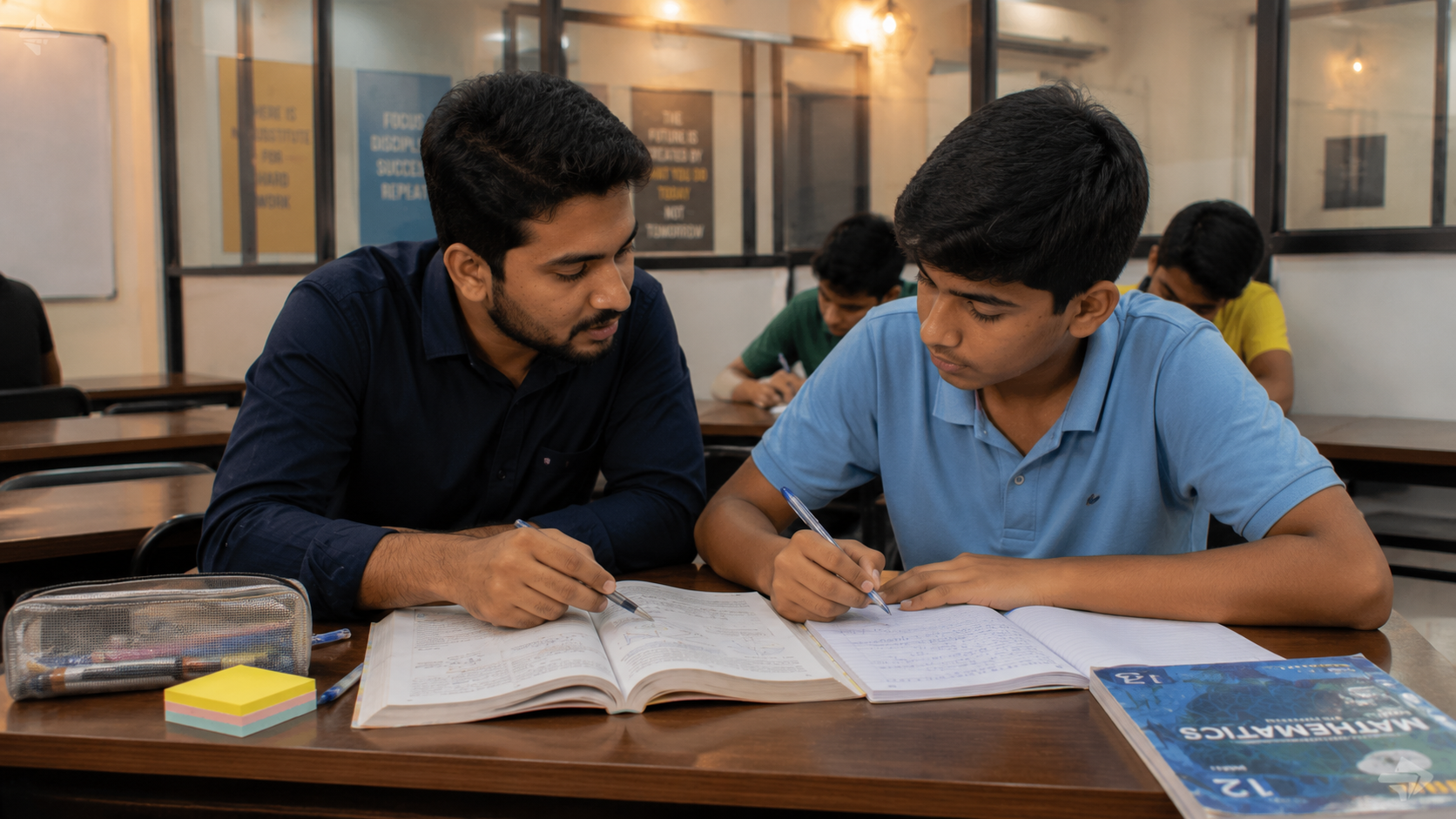
A batch of 8 to 14 students per teacher allows a teacher to identify which students are keeping up, which are lost, and which are ahead — and to adjust accordingly. At 25 or more students, this individual awareness becomes practically impossible and the class becomes a lecture, not a coaching session.
NCERT has introduced new textbooks for Classes 6 and 7 under the NCF-SE framework, with transitions underway for Class 8. A coaching centre that is still teaching from old textbooks for classes that have moved to new NCERT editions is creating a mismatch between what the student learns in coaching and what is in their school textbook and board syllabus.
For Classes 9, 10, 11, and 12, the NCERT editions are largely unchanged for 2026–27, but the question still reveals whether the centre is tracking CBSE's curriculum documents or working from memory and outdated materials.
CBSE Class 9–12 have two or three periodic tests per term, and these form part of the internal assessment (20 marks total in Class 9–10). A coaching centre that focuses entirely on final exam preparation is not aligned to how CBSE actually assesses students throughout the year.
Good coaching centres schedule their teaching so that by the time a periodic test is approaching, the relevant chapters have been covered, revised, and tested internally. Ask specifically: "How do you track which chapters are coming up in my child's school's periodic test schedule?"
A centre that claims to teach all subjects from Class 1 to 12 with equal depth should be questioned. Teaching Class 11–12 Accountancy well requires not just knowledge of the CBSE syllabus but active familiarity with how the board frames reconstitution problems, company accounts formats, and cash flow statements. Teaching Class 9 Science well requires knowing exactly which experiments CBSE expects and how competency-based questions are framed.
Ask specifically who teaches each subject for your child's class — their background, how long they have been teaching that subject and level, and whether they teach it full-time or as an additional subject.
A coaching centre that only contacts parents when there is a problem has a reactive, not a structured, parent communication model. This is a meaningful quality signal. Parents who are informed of their child's test scores, attendance, and conceptual gaps on a regular basis can course-correct before problems become serious.
Ask specifically: How will I know if my child is not keeping up? How will I know if my child misses a class? What is the format — phone call, WhatsApp, scheduled parent meeting? How frequently does this happen in practice, not in policy?
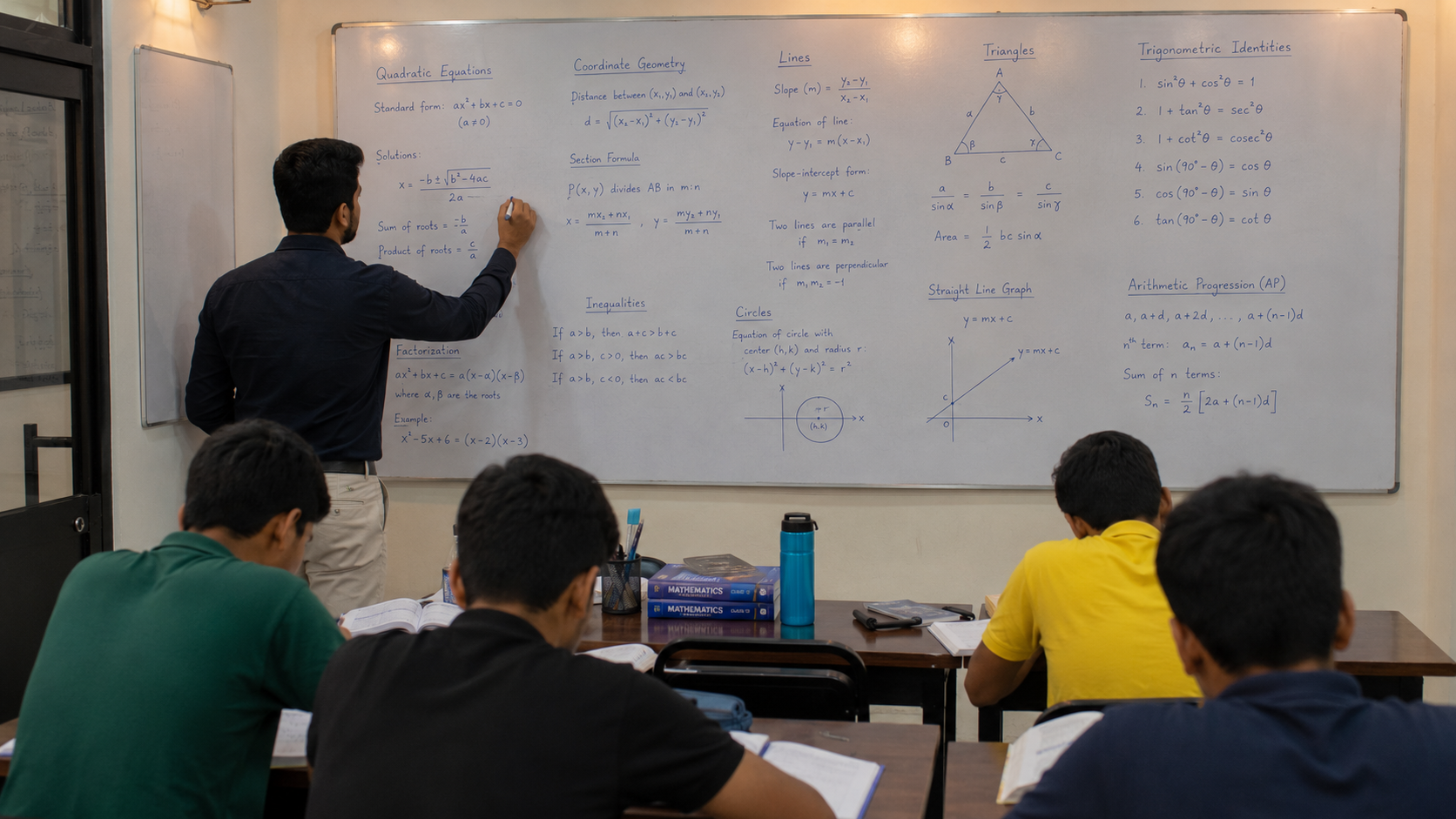
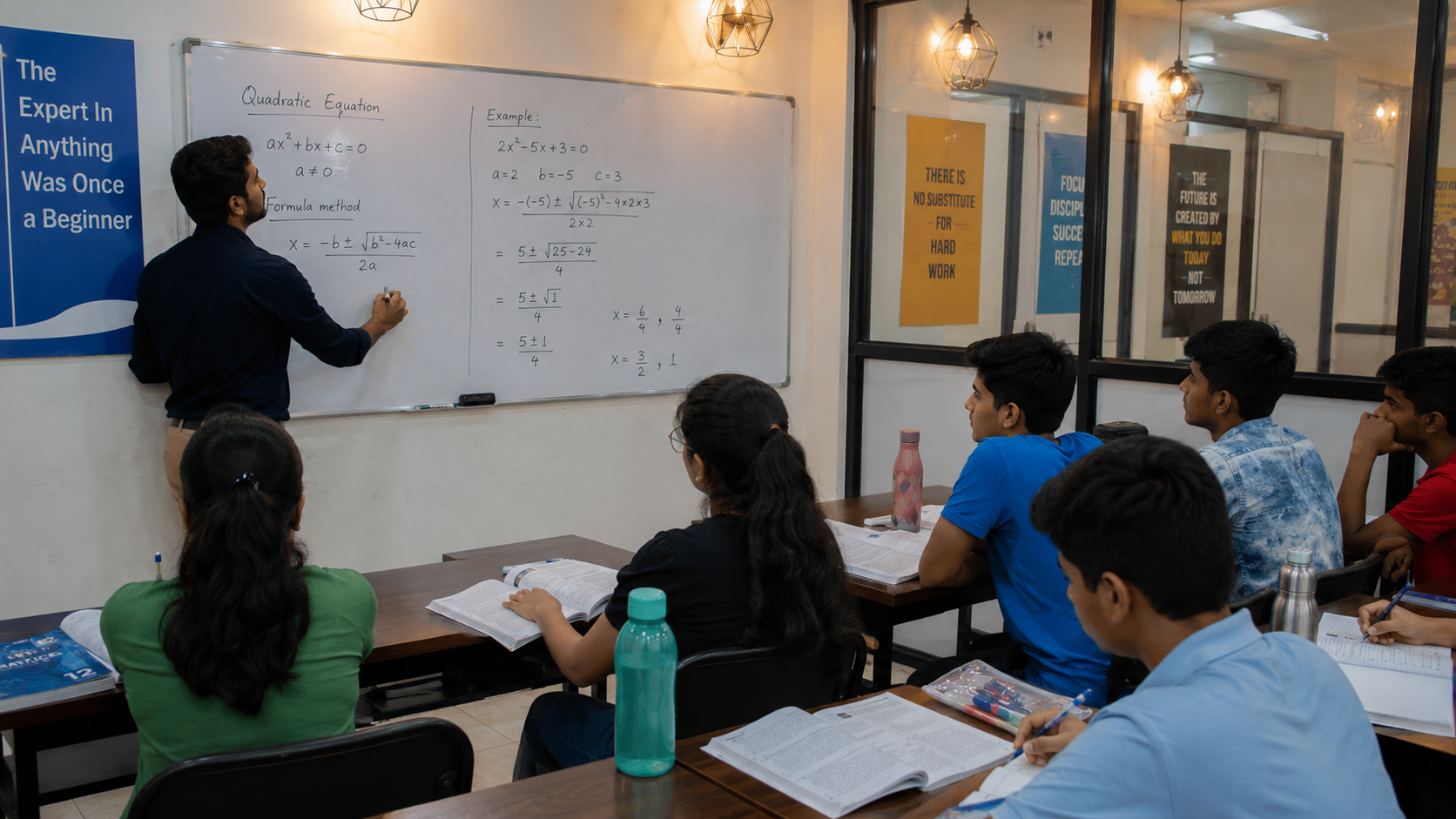
A demo class — where a parent sits in on a real coaching session — is the most reliable way to assess teaching quality. It reveals batch size in practice, teaching style, how questions are handled, how the board is used, how much time is given to students versus how much is lecturing, and whether the pace suits the class level.
Centres that offer only centre tours, fee discussions, or one-on-one meetings with the centre admin — but not a demo class — are limiting your ability to make an informed assessment. A good coaching centre should be confident enough in its classroom experience to invite prospective parents to observe.
Students miss classes — for school events, illness, family commitments. The question is what happens when they do. Coaching centres that operate in a fixed sequence (Chapter 2 is covered on Tuesday, period, and if you missed Tuesday you missed it) leave students with accumulating gaps over time.
Ask specifically: If my child misses a class, what is the process for covering what was missed? Is there a recorded session, a written notes summary, or a dedicated makeup slot? How is this handled in practice when multiple students miss the same class?
Frequently Asked Questions
Share this checklist with a Dwarka parent.