Skip to content
Choosing Coaching Dwarka Parents · 2026

How to Choose the Best CBSE Coaching Institute in Dwarka 2026

A framework for Dwarka families. What coaching quality actually looks like, which signals matter, which to ignore — and how to match a centre to your child's specific situation.

Expert Tutorials, Dwarka Published 15 April 2026 7 min read
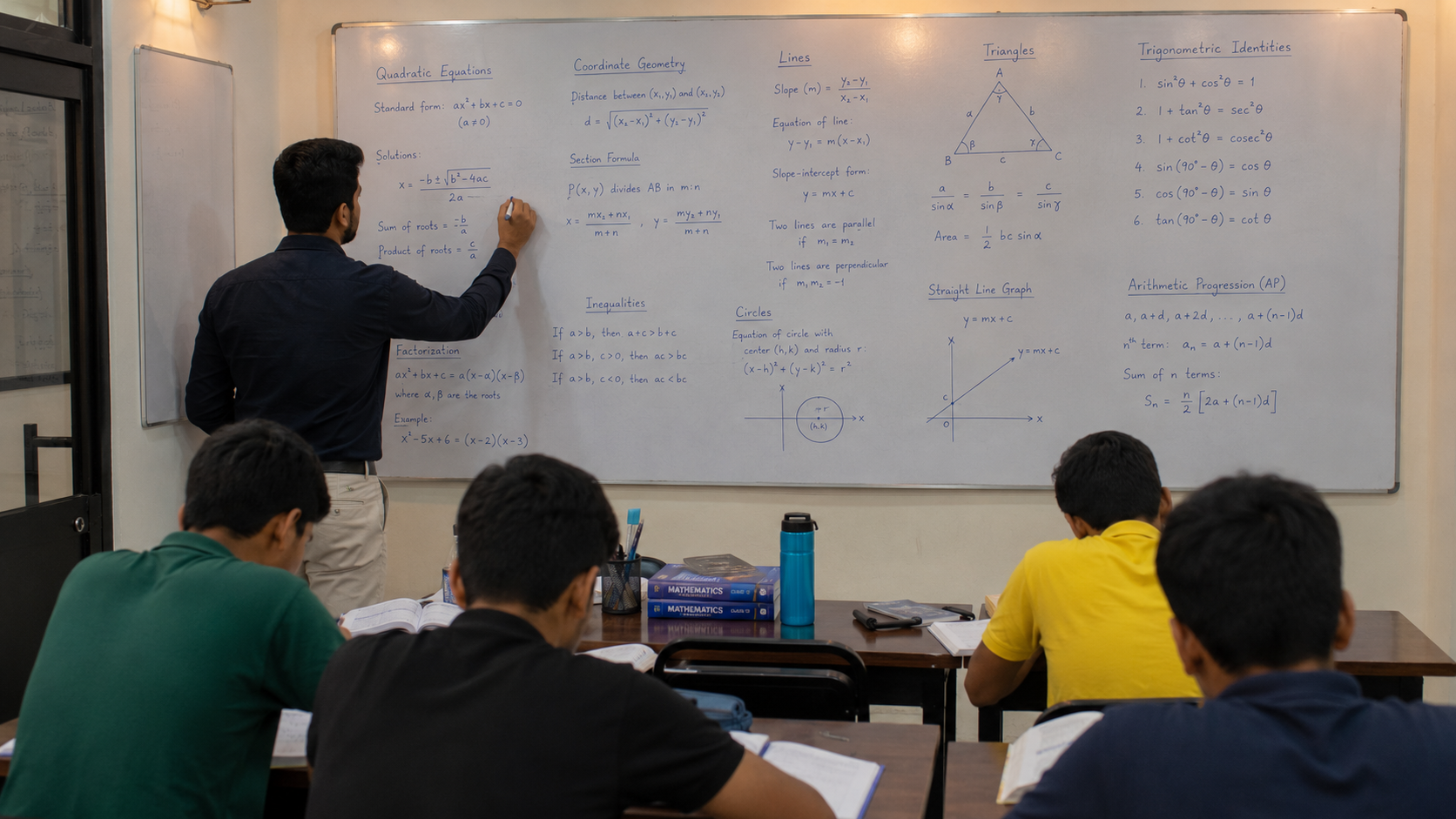
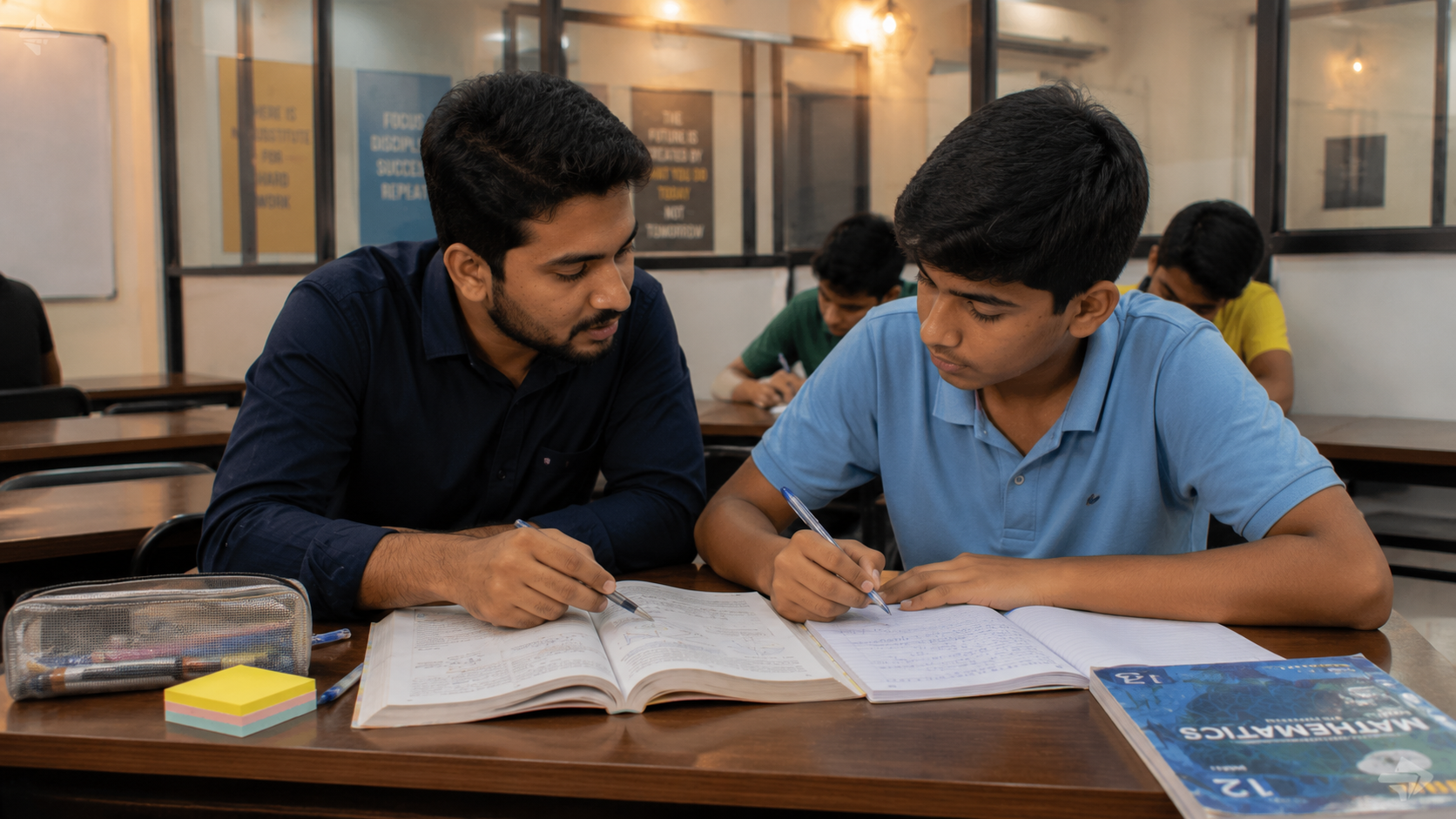
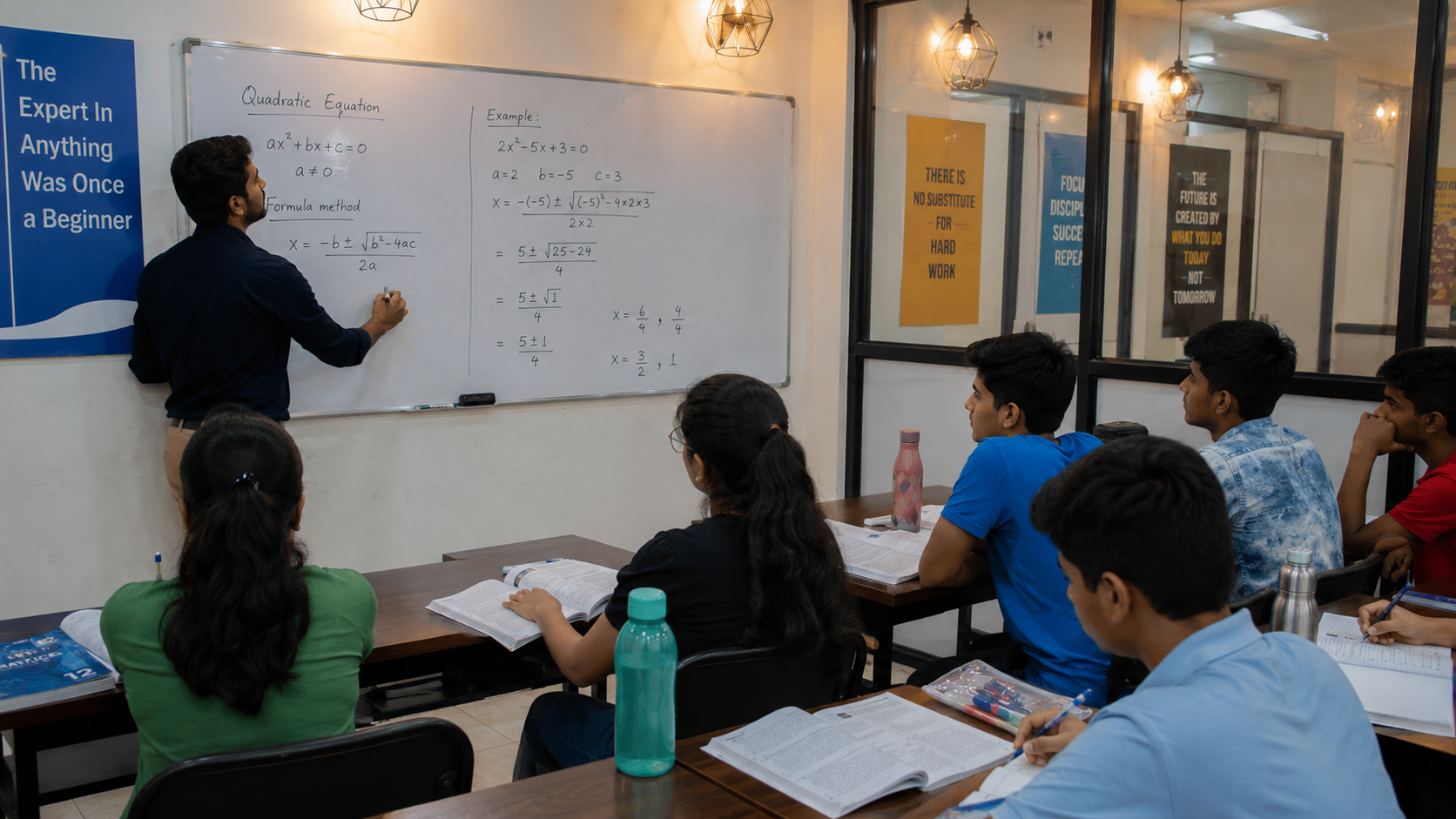
Expert Tutorials CBSE coaching classroom Dwarka

Dwarka families searching for coaching in April 2026 will encounter a common problem: every centre claims to be the best. Walls lined with toppers' photos, claims of "personalised attention" despite 40-student batches, and fee structures that assume quality without demonstrating it.

This guide is a framework, not a ranking. It focuses on what actually determines whether coaching will make a difference for your child — in the specific class, subject, and situation they are currently in.

What to Ignore When Comparing Coaching Centres

Before the positive framework, it helps to recognise what is not a reliable signal of quality:

  • Toppers' boards and photographs — these show best-case outcomes, not average outcomes. A centre with 3 toppers out of 80 students is not demonstrating broad quality.
  • "Experienced faculty" claims — experience in what? At what class level? In which subjects? A teacher with 20 years of Science coaching is not automatically a strong fit for Commerce, or for Class 6.
  • Fees as a proxy for quality — higher fees in Dwarka coaching don't correlate reliably with better teaching outcomes. They correlate with location, branding, and overhead costs.
  • Online reviews alone — reviews are self-selecting. Parents who are happy leave reviews; parents who switched centres often don't. They also say little about whether the centre is right for your child's specific situation.

5 Criteria That Actually Predict Coaching Quality

01
Subject-level specialisation
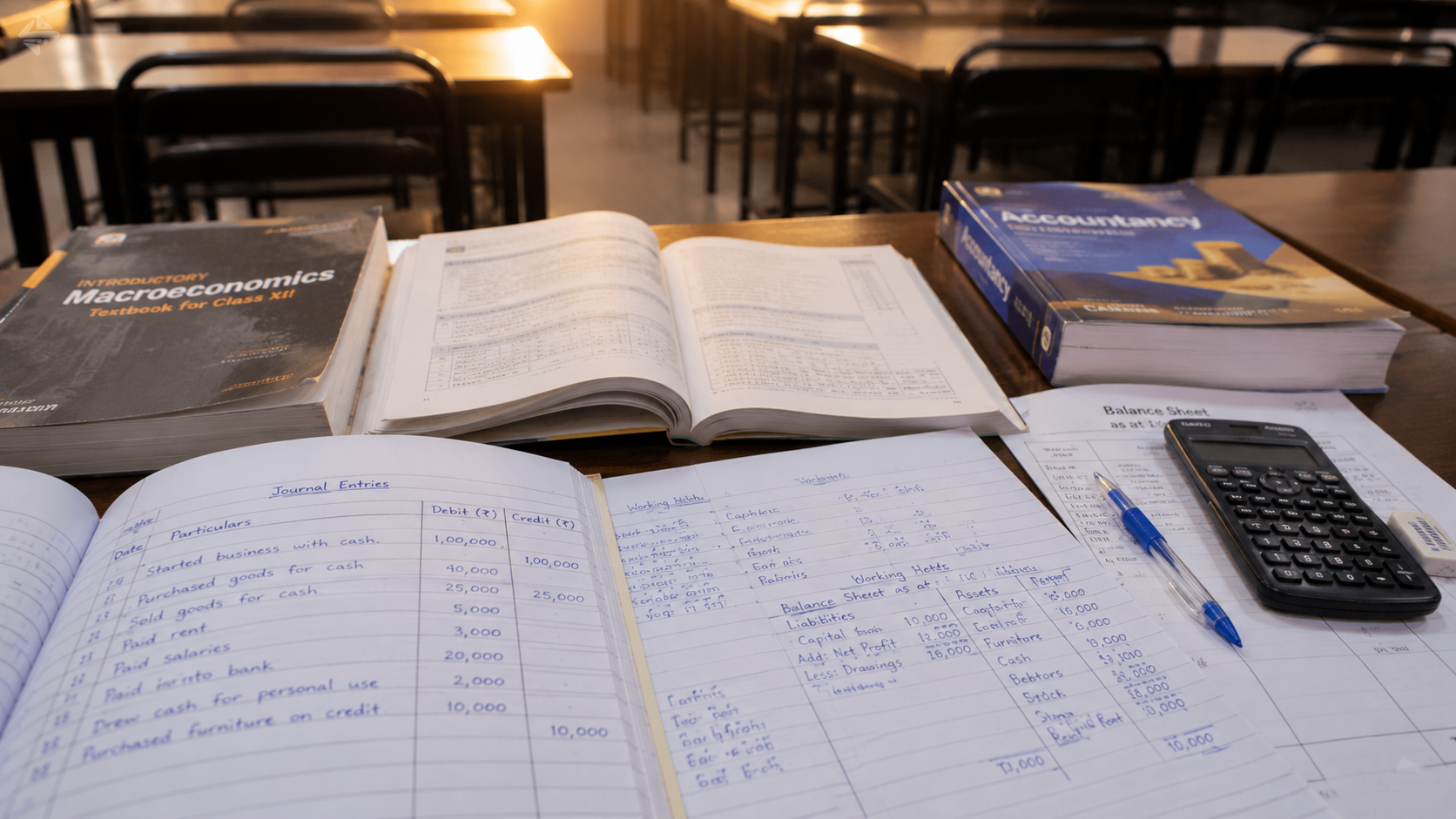
A centre that specialises in the subjects your child needs — not everything for everyone — is significantly more likely to have depth where it counts. For Class 11–12 Commerce, this means active familiarity with how CBSE frames reconstitution problems in Accountancy, case study questions in BST, and long-answer structuring in Economics. For Class 9, this means knowing exactly which Maths chapters are most frequently tested in the board pattern.
02
Batch size per subject, per class
Not total enrolment — the specific batch size for your child's class and subject. A centre with 200 students total but batches of 10 per subject group can deliver individual attention. A centre with 50 students total but 40 per batch cannot. Ask for the current number in the specific batch, not the centre's capacity.
03
Alignment to current CBSE assessment calendar
Does the centre track your child's school's periodic test schedule and align its chapter coverage accordingly? Or does it run on its own timeline regardless of what the school is assessing? The latter means students are often being tested on material in school before they have covered it in coaching — creating a mismatch that costs marks throughout the year.
04
Current NCERT edition alignment
For Classes 6 and 7, NCERT has introduced significantly revised textbooks under the NCF-SE framework. Coaching centres that are still teaching from old editions for these classes are creating a mismatch between coaching content and school content. For Classes 8–12, editions are largely stable for 2026–27 — but still verify the centre is using the current CBSE syllabus document for each class.
05
Structured progress communication
A coaching centre that only contacts parents when something is wrong is a reactive system. The best centres give parents regular, specific updates on their child's performance in internal tests — not just vague verbal reassurances. Ask what the specific format and frequency of parent communication is before enrolling.
Expert Tutorials at Sector 8 Dwarka — CBSE coaching for Class 6 to 12. Small batches, current NCERT editions, periodic-test-aligned teaching. Free demo class before enrolment. Evening Mon–Sat, 3–7 PM. Book Demo

Matching the Centre to Your Child's Situation

Beyond general quality signals, the right choice depends on specifics. Here are the most common situations and what to prioritise:

Class 6–8: Foundation years

For Class 6–8 students, the priority is a centre that uses the current NCF-aligned NCERT textbooks (especially for Classes 6 and 7), teaches conceptual understanding rather than rote memorisation, and maintains small enough batches that the teacher knows which students are struggling with which topics. Proximity matters more at this age — a student who is fatigued from a 40-minute commute will not absorb coaching content effectively.

Class 9–10: Critical preparation years

The Class 8 to Class 9 transition is the largest jump in the CBSE school career for Maths and Science. A coaching centre that is well-aligned to the Class 9 CBSE syllabus — which introduces algebra, coordinate geometry, motion, matter, and the French Revolution simultaneously — needs strong subject teachers, not generalists. For Class 10, the additional factor is board exam pattern familiarity: does the centre train students in the specific format, word count, and diagram requirements of the CBSE Class 10 board paper?

Class 11–12 Commerce: Specialisation is non-negotiable

At Class 11 and 12 Commerce, general coaching centres cannot deliver the same outcomes as a Commerce-specialist centre. The reason is simple: Accountancy, Business Studies, and Economics are domain-specific subjects where the CBSE paper pattern, chapter weightage, and answer formatting conventions are the difference between 70 marks and 90+ marks. A centre that also teaches Physics and Chemistry alongside Commerce is splitting subject focus in a way that rarely benefits Commerce students.

One reliable test: Ask the centre to show you a recent internal test paper for your child's class and subject. A well-designed internal test should mirror the CBSE question paper pattern — marks distribution, question types, and time allocation. If the internal test looks nothing like a CBSE paper, the centre is not preparing students for the assessment they will actually face.
Praveen Singh & Expert Tutorials Teaching Team
Expert Tutorials at Sector 8 Dwarka offers CBSE coaching for Class 6 to 12, with specialisation in Commerce at Class 11–12. We maintain small batches, align teaching to periodic test schedules, and offer a free demo class before enrolment.

Frequently Asked Questions

There is no single best centre for every student. The right centre depends on the child's class, subjects needed, specific gaps, preferred timing, and learning style. Evaluate specifically against your child's needs rather than looking for a general top-ranking centre.
Proximity matters for sustainability, especially for younger students. Within Dwarka, most families are within 10–15 minutes of multiple coaching options. Within that radius, the substantive factors — batch size, subject expertise, NCERT alignment — should take priority over proximity alone.
Expert Tutorials at Sector 8 Dwarka offers CBSE coaching for Class 6 to 12. For Class 6–10, we teach Maths, Science, Social Studies, and English. For Class 11–12, we specialise in Commerce subjects: Accountancy, Business Studies, Economics, and Applied Maths. Contact us on WhatsApp at +91 88029 66679 for a free demo class.

Found this framework useful? Share it.
Expert Tutorials · Dwarka Sector 8

Ready to assess us against your own checklist? We welcome it.

Free demo class before enrolment. CBSE coaching for Class 6 to 12. Small batches, current NCERT editions. Commerce specialisation at Class 11–12. Evening batches Mon–Sat, 3–7 PM.