Ask any experienced CBSE educator which is the harder year — Class 9 or Class 10 — and a significant majority will say Class 9. The surprise in this answer tells you something important: most students and parents are preparing for the wrong battle. They prepare intensively for Class 10 Boards and are caught off guard by Class 9's demands. This article explains why Class 9 deserves more attention than it gets, and what CBSE students in Dwarka, Delhi should do about it.
Why Class 9 Is Harder Than Class 10
Class 10 is difficult, but it has one enormous advantage: the Board exam is defined. The syllabus is finite, the question patterns are known, and there are extensive resources available to guide preparation. Students know what to expect and can prepare systematically.
Class 9 has no such clarity. The syllabus is not smaller than Class 10's — in several subjects it is larger. But because there is no Board exam at the end of Class 9, students and parents often do not treat it with appropriate seriousness. This results in conceptual gaps that make Class 10 harder than it needed to be.
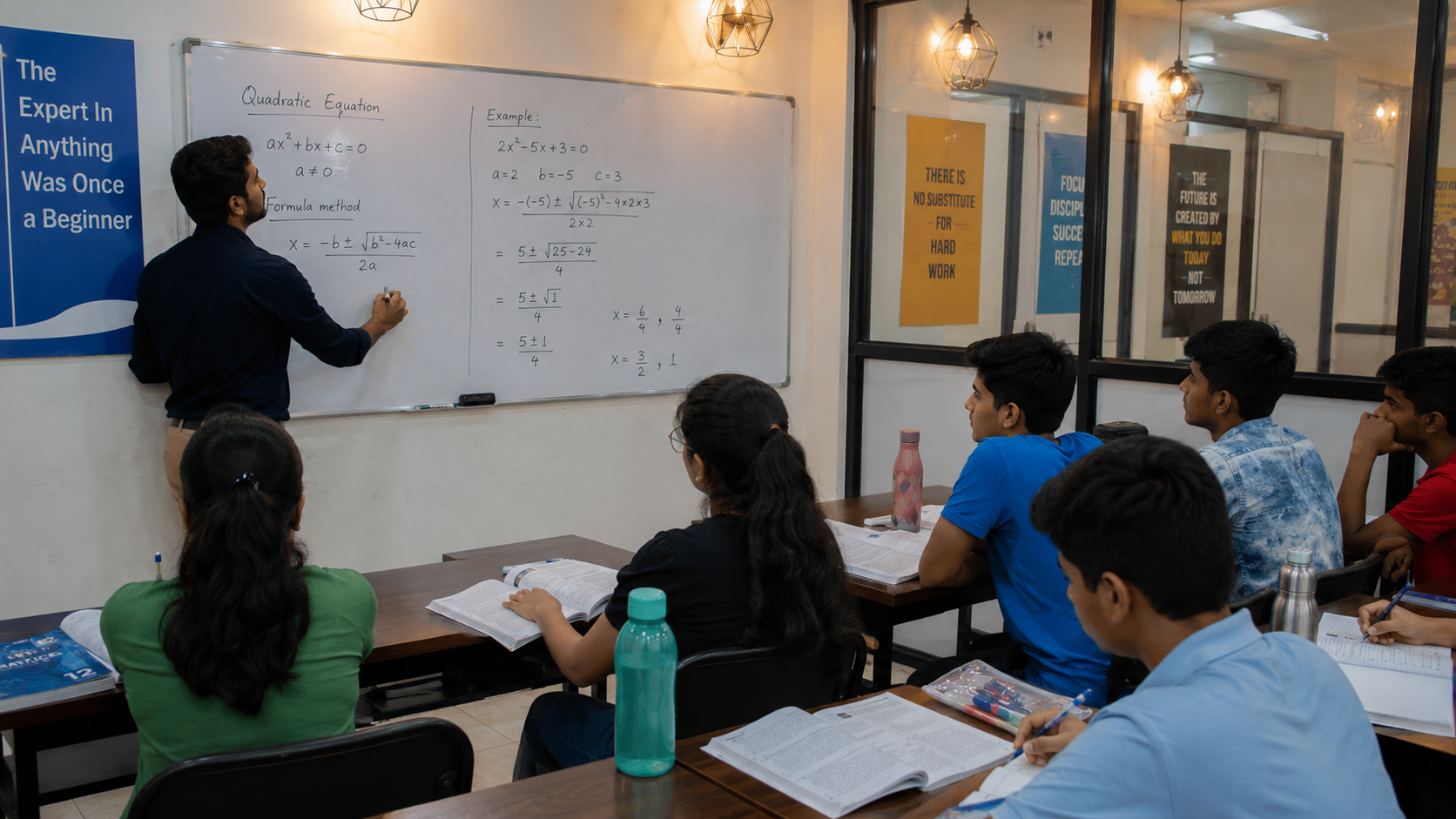
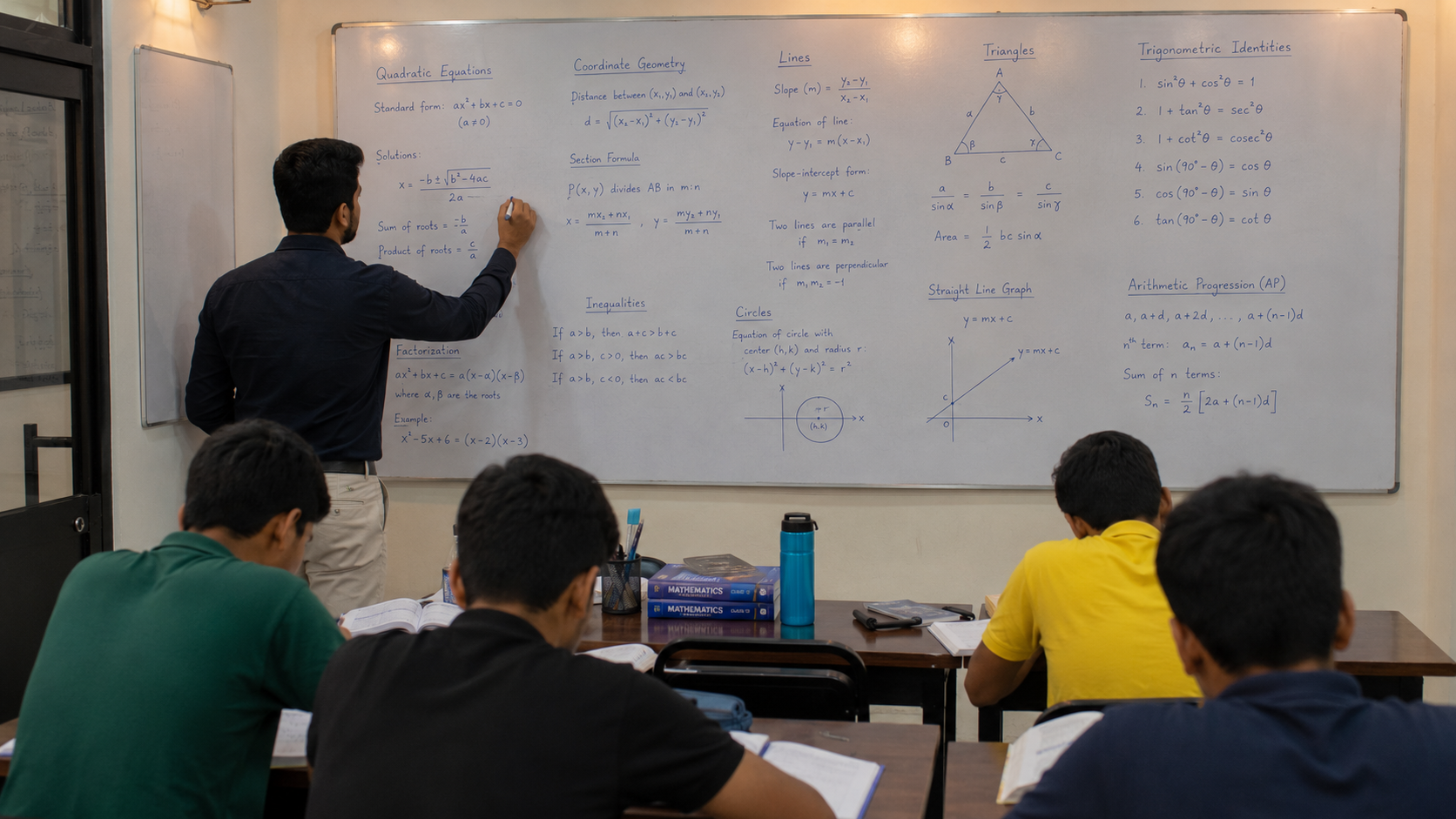
Class 9 Mathematics alone introduces Number Systems, Polynomials, Coordinate Geometry, Linear Equations in Two Variables, Triangles, Quadrilaterals, Circles, Heron's Formula, Surface Areas and Volumes, and Statistics. A student who does not master Polynomials in Class 9 will struggle significantly with Quadratic Equations in Class 10.
The Internal Assessment Danger
CBSE Class 9 has a significant internal assessment component — 20 marks per subject based on periodic tests, notebook submission, and subject enrichment activities conducted throughout the year. Many students ignore these marks assuming they can be made up elsewhere. But losing marks in internal assessment at the Class 9 level directly impacts the final annual result, which in turn affects school progression and the overall trajectory into Class 10.
Students and parents in Dwarka who approach Class 9 internal assessment casually are taking a risk that is entirely avoidable with consistent effort from the beginning of the session.
The Three Most Challenging Subjects in Class 9
Mathematics: The difficulty increase from Class 8 to Class 9 is significant. Students who were comfortable in Class 8 Maths often struggle in Class 9 within the first month. The key is to address any gap as soon as it appears rather than hoping it resolves on its own.
Science: Class 9 Science is divided into Physics (Motion, Force, Work, Sound), Chemistry (Matter, Atoms, Molecules, Structure of Atom), and Biology (Cell, Tissues, Diversity, Why Do We Fall Ill, Natural Resources). The volume is high and the concepts are genuinely new for most students.
Social Science: Often underestimated, Class 9 SST introduces History (France, India's Nationalist Movement), Geography (India's physical features, climate, rivers, vegetation), Political Science (democracy, electoral politics), and Economics (village economy, food security). Regular study throughout the year is essential — last-minute cramming rarely works for this subject.
How to Handle Class 9 in Dwarka
The most effective approach for Class 9 CBSE students in Dwarka and Delhi is to treat it as a Board year in terms of regularity and seriousness, without the Board exam deadline creating artificial urgency. This means starting structured coaching from April, maintaining consistent school and coaching attendance, never leaving internal assessments to chance, and practising Mathematics daily throughout the year.
Students who join coaching in Class 9 from the first week of April and maintain regular attendance through the full academic year enter Class 10 with a significant advantage: their conceptual foundations are solid, their study habits are established, and they have already experienced a full year of exam-type testing.
The Comparison: Class 9 vs Class 10 Demands
Class 10 demands intense preparation in a structured, time-bound way. But the pressure is visible and manageable because the goal is clear. Class 9's danger is subtler: there is no external deadline, the consequences of poor performance are delayed, and the conceptual gaps accumulate silently until they surface as a Class 10 crisis.
Students and parents who understand this distinction treat Class 9 with the strategic seriousness it deserves — and consistently find that their Class 10 Board preparation is smoother, less stressful, and more productive as a result.
What CBSE Students Should Do Right Now
- Begin coaching at the start of the academic session, not after the first unit test reveals a problem
- Track internal assessment activities from the first week — periodic tests, notebooks, and subject enrichment all count
- Never skip Mathematics practice, even on school-holiday weeks
- Treat Science as three subjects in one — Physics numericals, Chemistry reactions, and Biology diagrams each need their own study approach
- Read Social Science chapters regularly rather than cramming before exams
Frequently Asked Questions
Found this useful? Share it.