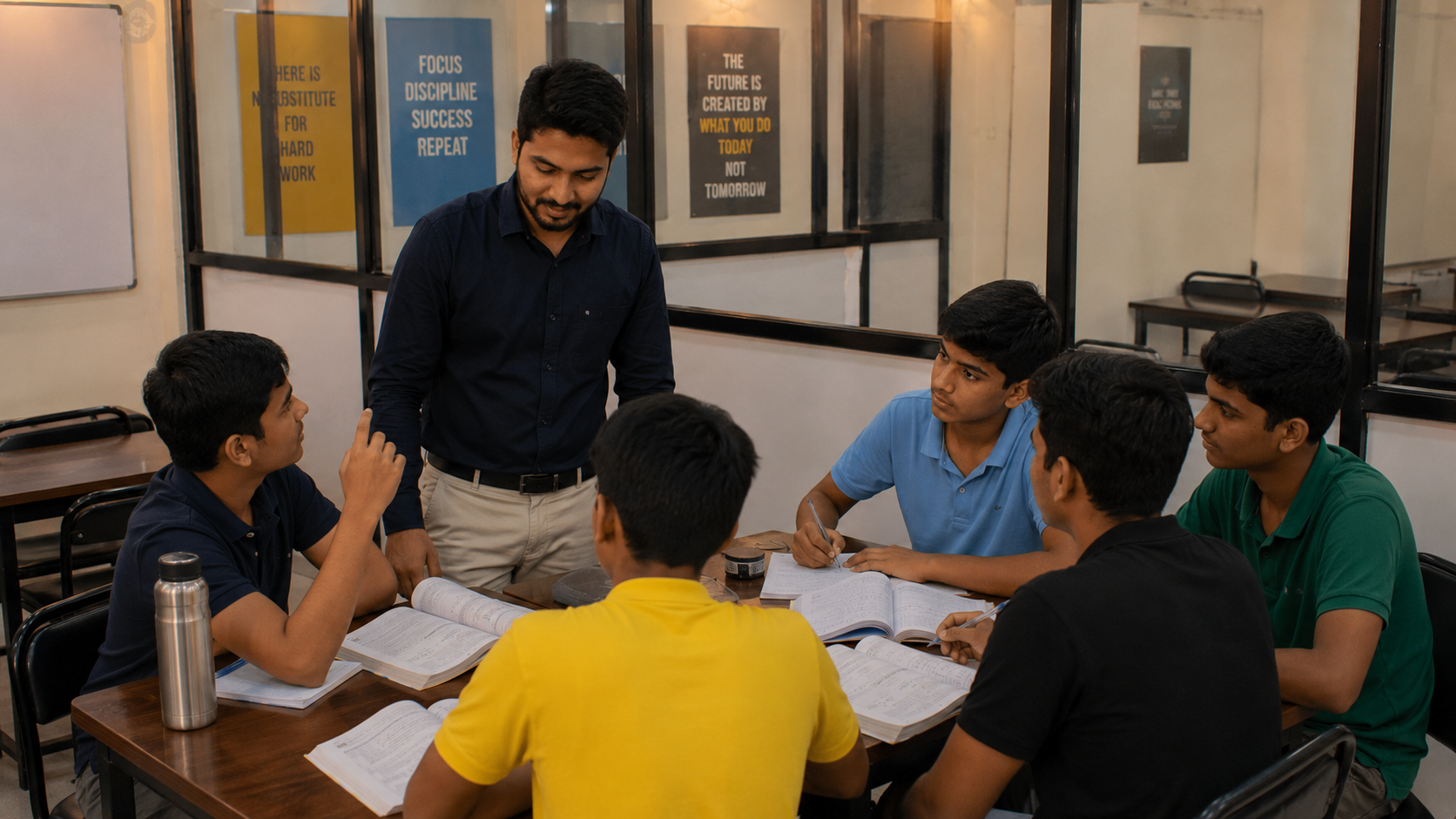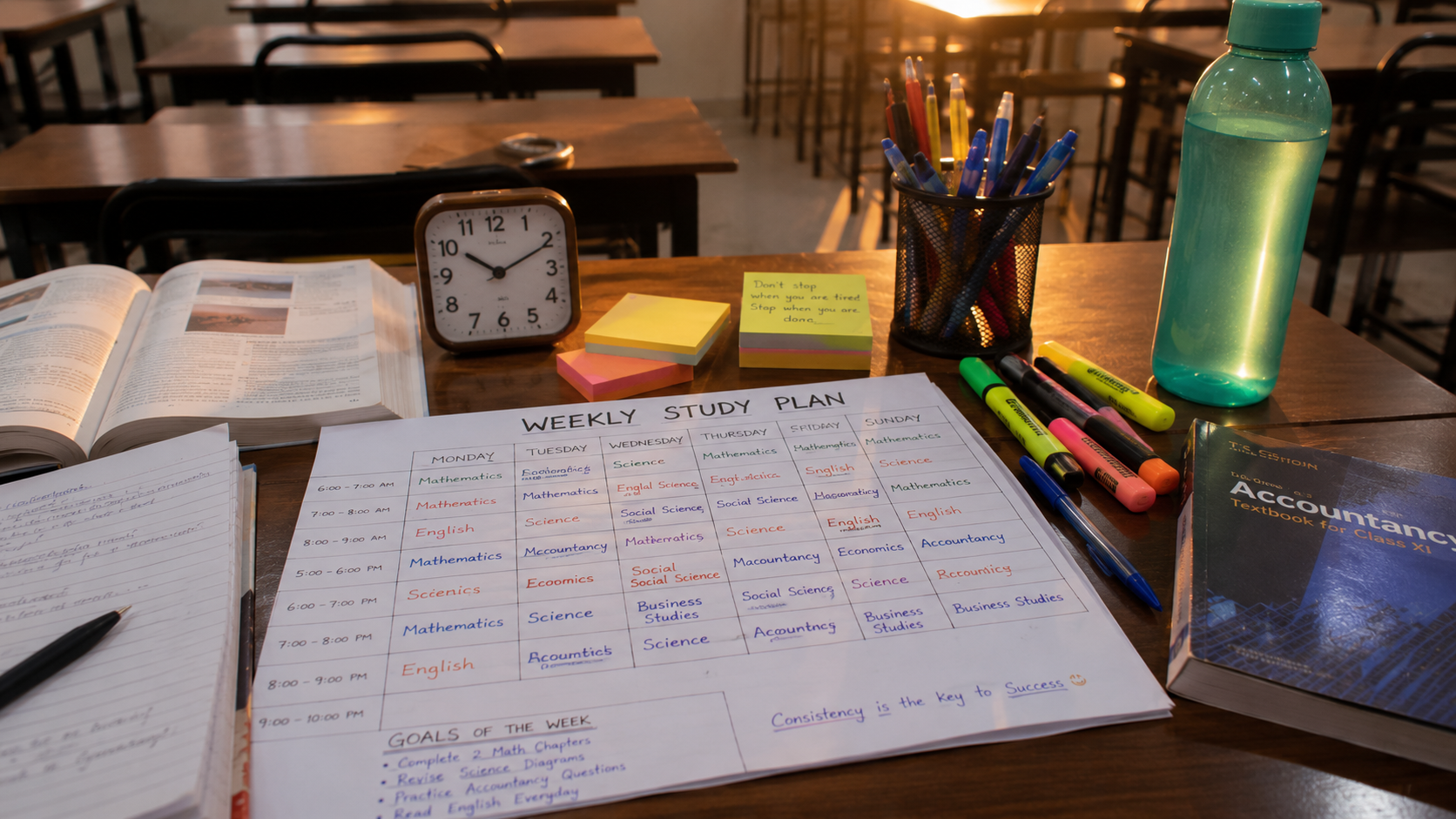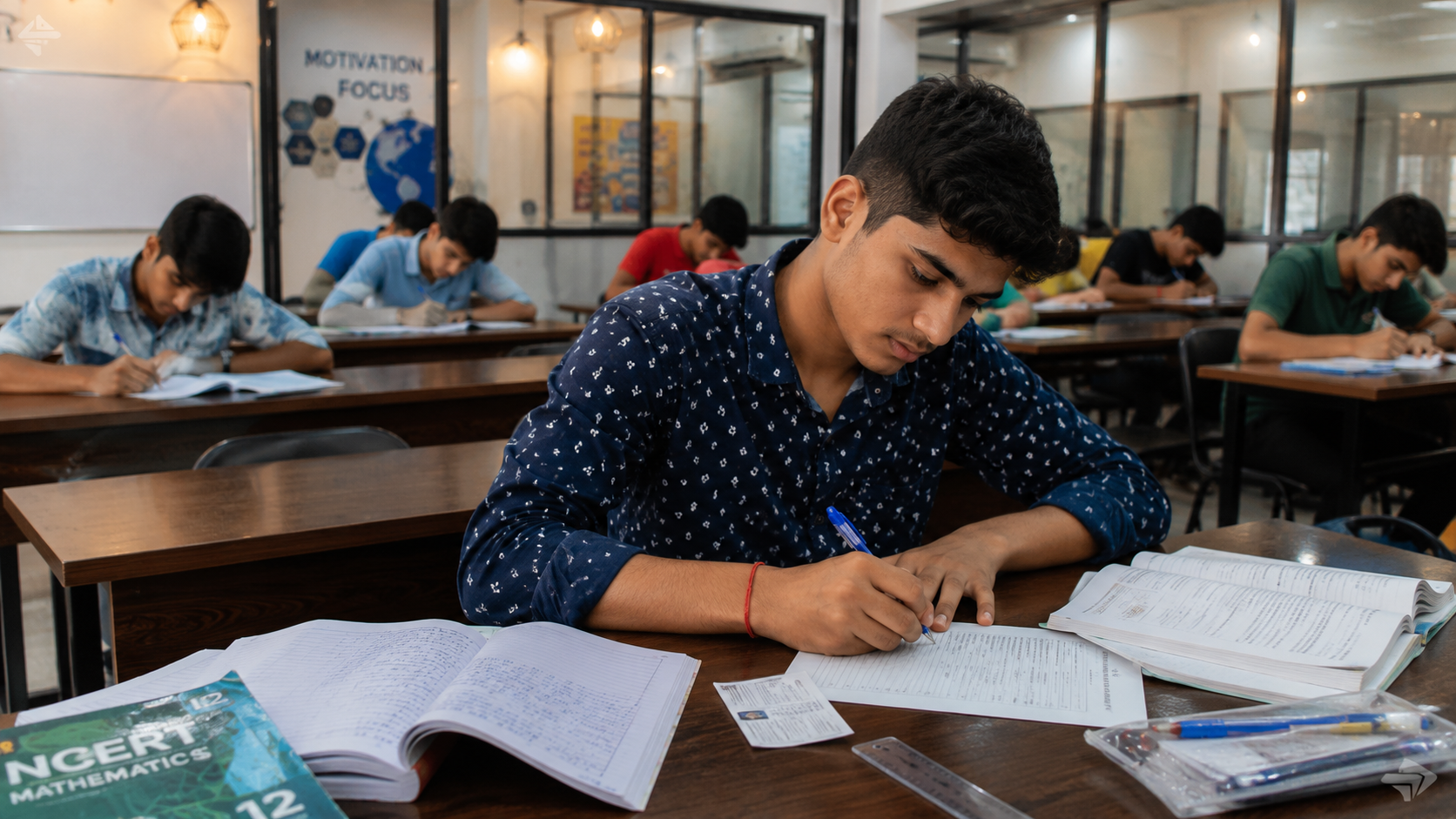
The CBSE Class 10 board exam is the first high-stakes national-level assessment most students face. It determines stream eligibility for Class 11, builds the academic confidence and habits that carry into Class 12, and — for many families in Dwarka — is a milestone with real emotional weight. The students who do well are not always the most naturally talented; they are usually the ones who started preparing methodically and early.
The Year-Long Preparation Roadmap
Effective board preparation for Class 10 has three distinct phases. Each phase has a different focus and a different relationship to the exam timeline.
Phase 1: Foundation (April–September)
This is the chapter-building phase. Every chapter taught in school and coaching should be understood, notes written, and NCERT exercises completed. This phase is not about revision — it is about building a complete understanding of every chapter in the syllabus. Students who take this phase seriously arrive at the revision phase with nothing unfamiliar remaining.
Phase 2: Consolidation and Practice (October–December)
By October, the CBSE sample papers for the current year are released. This phase shifts from learning new chapters to reviewing and practising. Completing NCERT Exemplar problems, attempting past board papers chapter by chapter, and doing school unit tests seriously all belong in this phase. The goal: every chapter reviewed at least once, weak chapters identified.
Phase 3: Pre-Board and Final Preparation (January–March)
School pre-boards in January are a full simulation of board conditions. Take them seriously. The 6–8 weeks after pre-boards are the most important in the calendar — this is where targeted revision of weak chapters, full timed mock papers (at least 2 per subject), and answer writing practice make the biggest difference.
Subject-by-Subject Approach for Dwarka Students
Mathematics: The most practice-dependent subject. Completing NCERT exercises for every chapter is the minimum. Understanding why each step works (not just memorising steps) ensures you can handle paper variations. High-scoring chapters: Arithmetic Progressions, Coordinate Geometry, Probability, Surface Areas and Volumes.
Science: Three sections (Physics, Chemistry, Biology) with different learning demands. Physics requires numericals practice; Chemistry requires equation balancing and reaction type understanding; Biology requires diagram labelling. Don't treat Science as one subject — prepare each section with the appropriate method.
Social Science: The most marks-per-hour subject if prepared well. All content is NCERT-based. Map work is consistently tested and easily learnt. Practise writing structured answers — this is where presentation directly converts to marks.
Don't Overlook Internal Assessment
CBSE Class 10 boards have a 20-mark internal assessment component per subject. This includes periodic tests, notebook submission, and subject enrichment activities. Students who take these seriously secure marks that require no additional exam performance to earn. Neglecting internal assessment is one of the most avoidable preparation errors — it directly reduces the ceiling of what's achievable in the final percentage.
Preparing for Exam Day
The week before each board paper is not the time for new study. It is for: revising key formulas and definitions, reviewing your notes on high-frequency topics, doing one timed section (not a full paper — just a section) to maintain writing speed, and managing sleep properly. Students who sleep 7–8 hours in the nights before exams consistently perform better than students who study through the night, because consolidated sleep is when the brain makes retrieval pathways stronger.
Frequently Asked Questions
Found this useful? Share it.