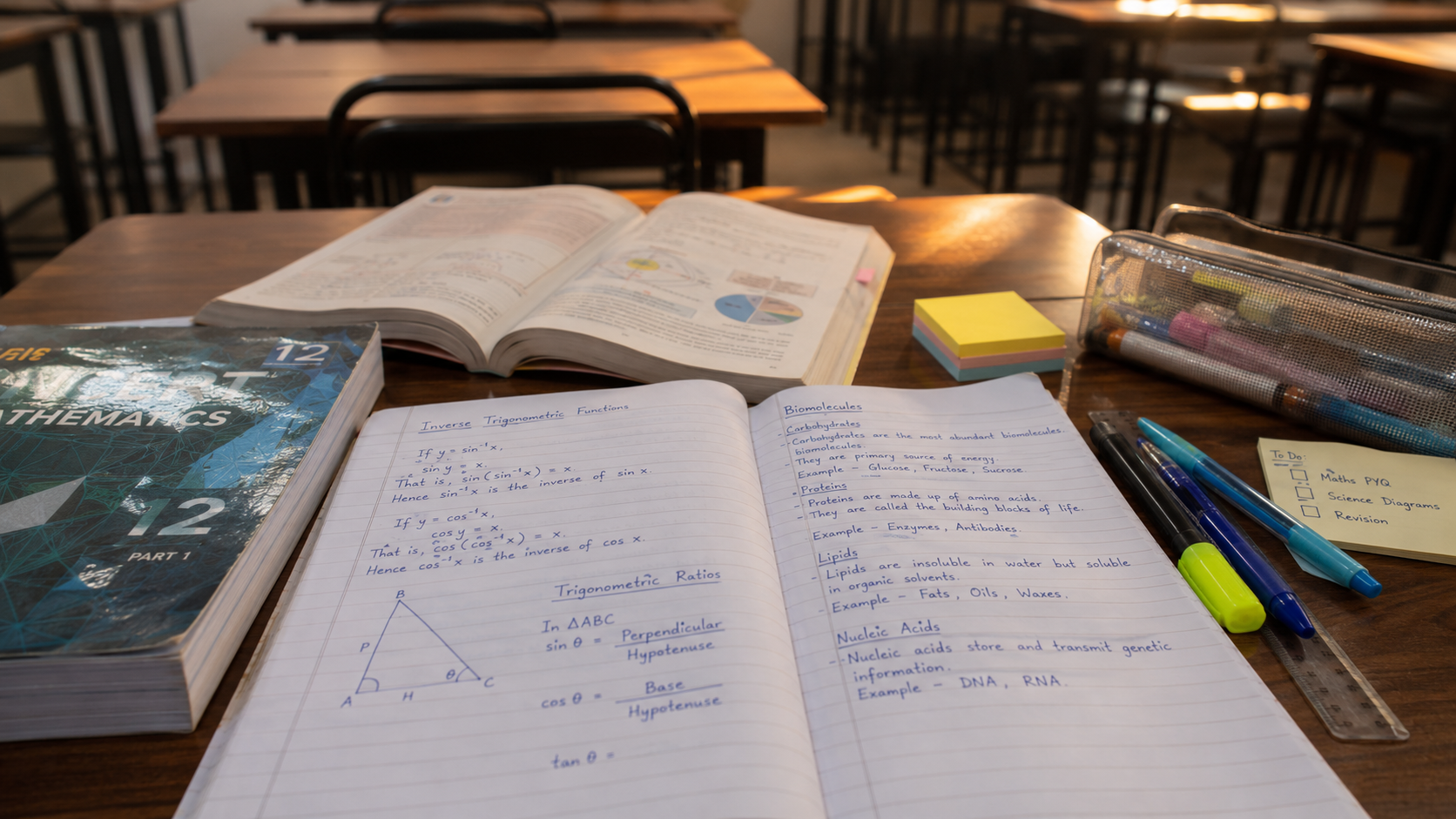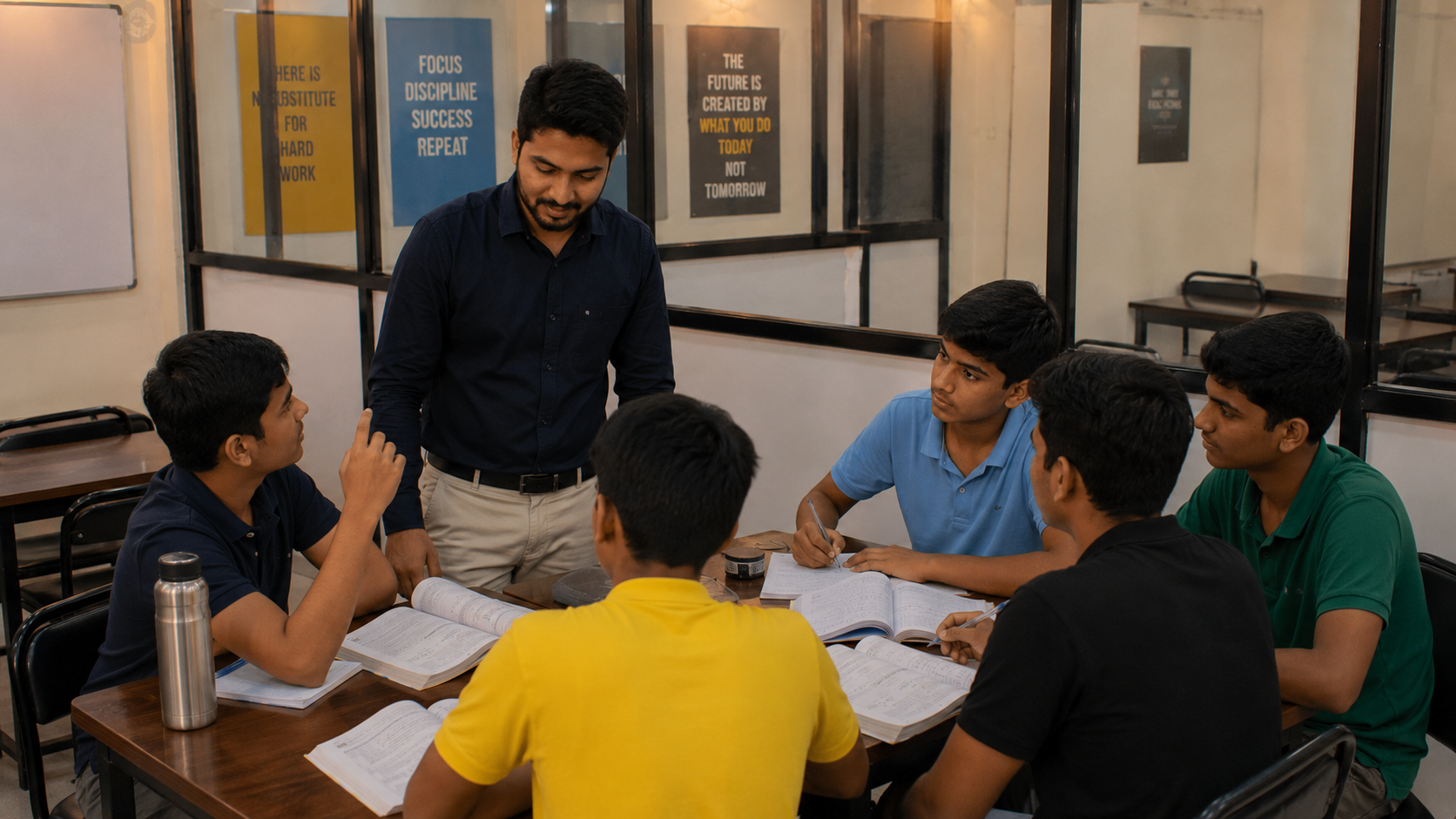
The most common timetable failure is overplanning. A student designs a 12-hour study day, follows it for two days, and then abandons the whole plan after the first disruption. The goal is a timetable you will actually follow for six months — not one that looks impressive on paper.
What a Realistic Class 10 Study Day Looks Like
A typical Dwarka Class 10 student leaves home by 7:30am, returns by 2:30–3pm, attends tuition between 3–5pm or 5–7pm, and needs to eat, rest briefly, and study in the evening. Realistically, the productive study window is 7:30pm to 10:30pm — three hours on a school day. That is not a lot, and it should be the starting point for your timetable design.
On weekends, a student has more flexibility — 5–6 hours of study spread across morning and early afternoon is achievable. This is when longer sessions, full-chapter reading, and problem sets belong.
How to Rotate Subjects Across the Week
Studying the same subject every day leads to fatigue and diminishing returns. A better approach is to rotate subjects across the week so each gets regular attention. A suggested pattern for a 5-subject Class 10 student (Maths, Science, Social Science, English, Hindi/language):
- Monday & Thursday: Mathematics (problem-solving requires fresh energy)
- Tuesday & Friday: Science (theory + numericals split)
- Wednesday & Saturday: Social Science (reading + map work)
- Daily (15–20 minutes): Language — read one passage, review one grammar rule
- Sunday: Revision of the week's work + one past paper question set
This rotation ensures no subject goes more than 3 days without attention, which is important for retention.
Building Revision Into the Timetable From Day One
Many students treat revision as something that happens only in the final weeks. This is incorrect and ineffective. Revision should be built into the weekly timetable from April. The simplest method: each Saturday morning, before starting new chapter work, spend 30 minutes reviewing the summaries from the previous 2 weeks. This cumulative review takes the same 30 minutes regardless of how many chapters you've covered, because you're reviewing summaries, not full chapters.
The Pre-Board Shift (January–February)
Two months before boards, the timetable should shift from new-chapter focus to exam practice. This means: reducing time on new content, increasing time on past papers and sample papers, and running at least one full timed mock paper per subject per fortnight. Each mock paper should be followed by a review session where every wrong answer is traced back to its root concept.
Pre-boards conducted by schools in January are an important benchmark. Students should treat them as real board exams — not casual assessments. The performance on pre-boards, analysed correctly, reveals the specific weak areas that need targeted revision in the remaining 6–8 weeks.
Frequently Asked Questions
Found this useful? Share it.