The Foundation: Small Batches Where Every Student Is Seen
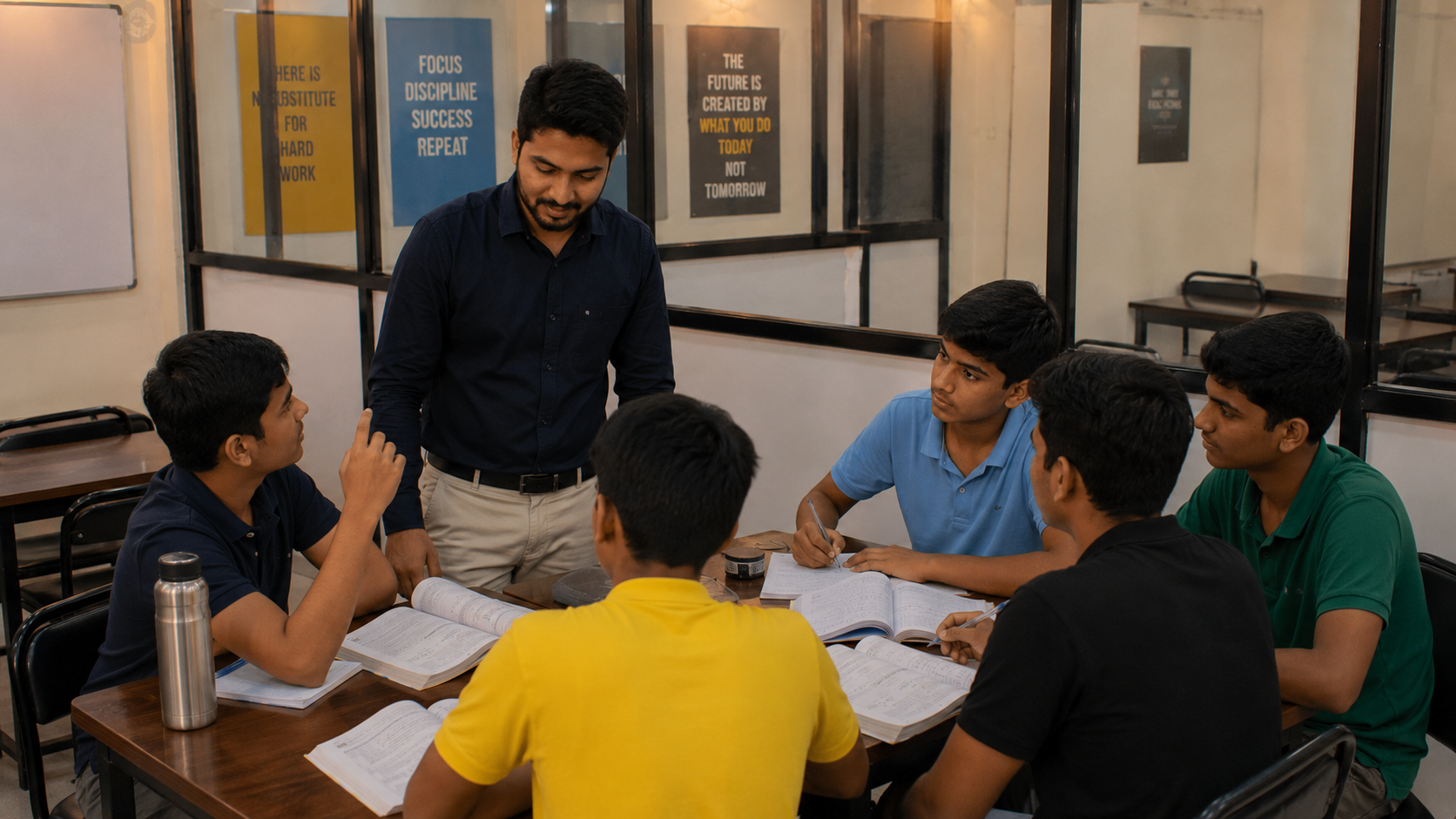
Every batch at Expert Tutorials is capped at 12 to 15 students per teacher. This is not a marketing statement — it is an operational decision that shapes everything else about how classes work.
In a batch of 12 to 15, a teacher can track each student individually. They know which student tends to struggle with the second step of a long division, which student understands concepts but makes calculation errors, and which student is genuinely lost versus just shy about asking. None of this is visible in a batch of 30 or 40.
The small batch model is the structural prerequisite for individual attention. Without it, everything else — diagnostic testing, gap analysis, targeted feedback — becomes impossible to execute in practice, regardless of what is claimed.
- Teacher knows each student by name and by specific learning pattern
- Confusion is visible in real time — teacher does not wait for a test to discover a student is lost
- Pace adjustments are possible without disrupting the group's overall progress
- Accountability for homework completion is practical and consistent
The Method: Concept-First, Then Pattern, Then Speed
Expert Tutorials uses a three-stage teaching method for every chapter in every subject. Understanding this method is the easiest way to evaluate whether the teaching approach matches what CBSE Boards actually test.
Stage 1 — Concept first: Before any formula, definition, or solved example is introduced, the teacher explains the underlying idea. Why does this work the way it does? What is the real-world phenomenon or logical structure being described? A student who understands this can reconstruct the formula if they forget it under exam pressure. A student who has only memorised the formula cannot.
Stage 2 — Pattern recognition: CBSE Board questions are not random. For any given chapter, the exam consistently uses a predictable set of question types — specific angles, specific diagrams, specific calculation structures. Teaching includes identifying and recognising these patterns so students know how to approach a question from the first line, not after ten minutes of guessing.
Stage 3 — Speed and accuracy practice: Once concepts are clear and patterns are recognised, timed practice drills build the speed and accuracy needed for Board exam conditions. This stage requires the first two to be in place — speed practice before conceptual clarity is counterproductive.
The System: Regular Testing With Closed-Loop Feedback
Expert Tutorials conducts fortnightly tests throughout the academic year — not just in the weeks before exams. These tests are diagnostic tools, not performance checkpoints. The distinction matters.
After each fortnightly test, the teacher reviews not just total scores but individual error patterns. A student who consistently misses questions on the same type of problem has a gap — that gap needs targeted practice, not more general revision. A student who makes calculation errors under time pressure needs speed drills, not more concept explanations.
This closed-loop system — teach, test, identify gaps, address gaps, test again — is what prevents a student from reaching February with significant unaddressed gaps that cannot be closed in four weeks.
The Schedule: Consistency Across the Academic Year
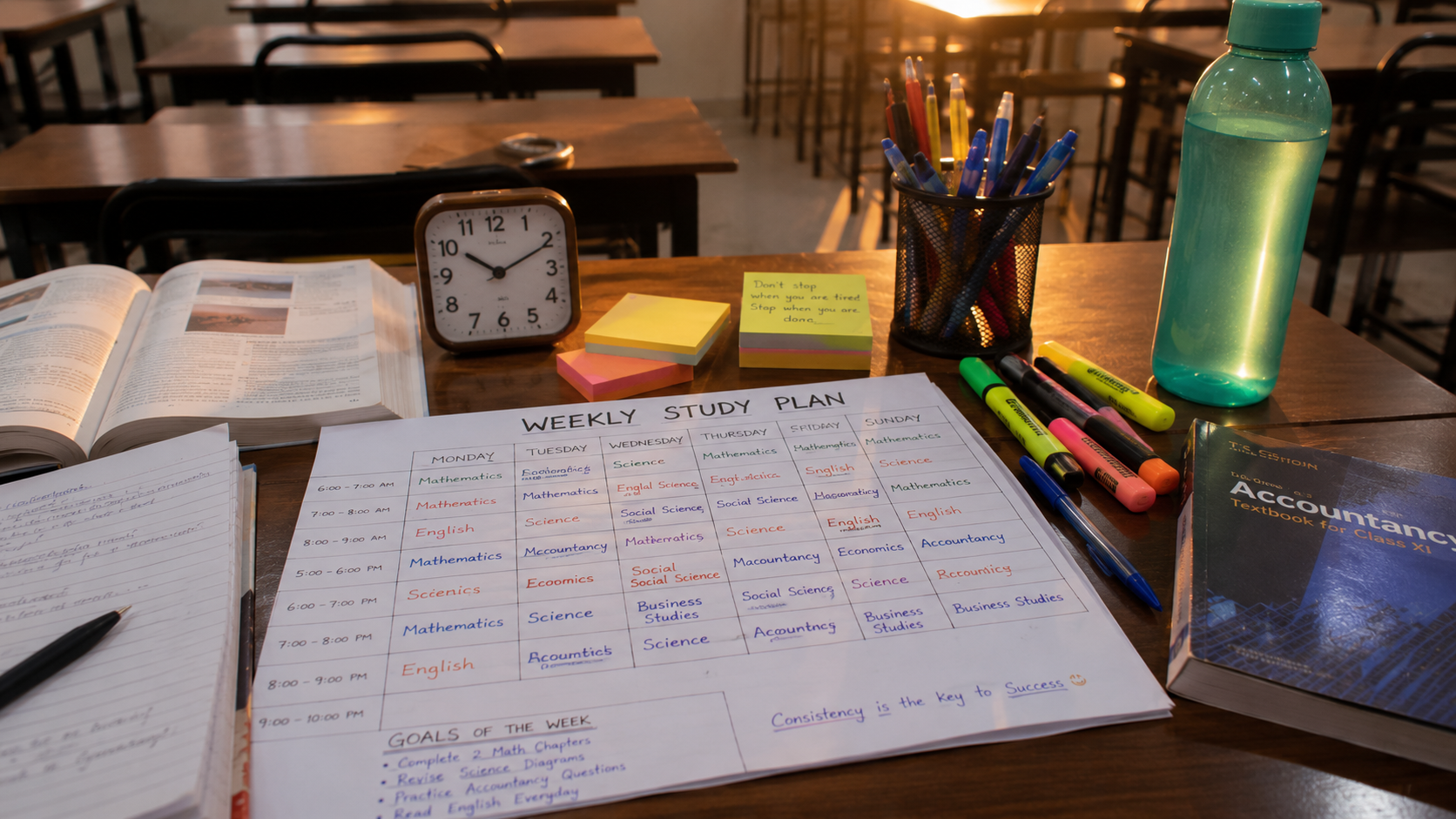
Expert Tutorials runs Monday to Saturday, 3:00 PM to 7:00 PM. Classes follow a structured chapter-by-chapter plan that is visible from day one of the academic year. Parents and students can see which chapters are scheduled for which months from April through February.
There is no random topic-jumping based on what the teacher feels like covering that week. The plan exists, it is followed, and deviations are explained. This predictability allows students to prepare between classes, allows parents to track progress meaningfully, and ensures that no chapter is skipped because time ran out before exams.
- Chapter-by-chapter curriculum plan available from day one
- No improvised topic selection week to week
- Students can prepare between classes because they know what is coming next
- No chapter is deprioritised because the schedule slipped
The Commerce Programme at Class 11–12
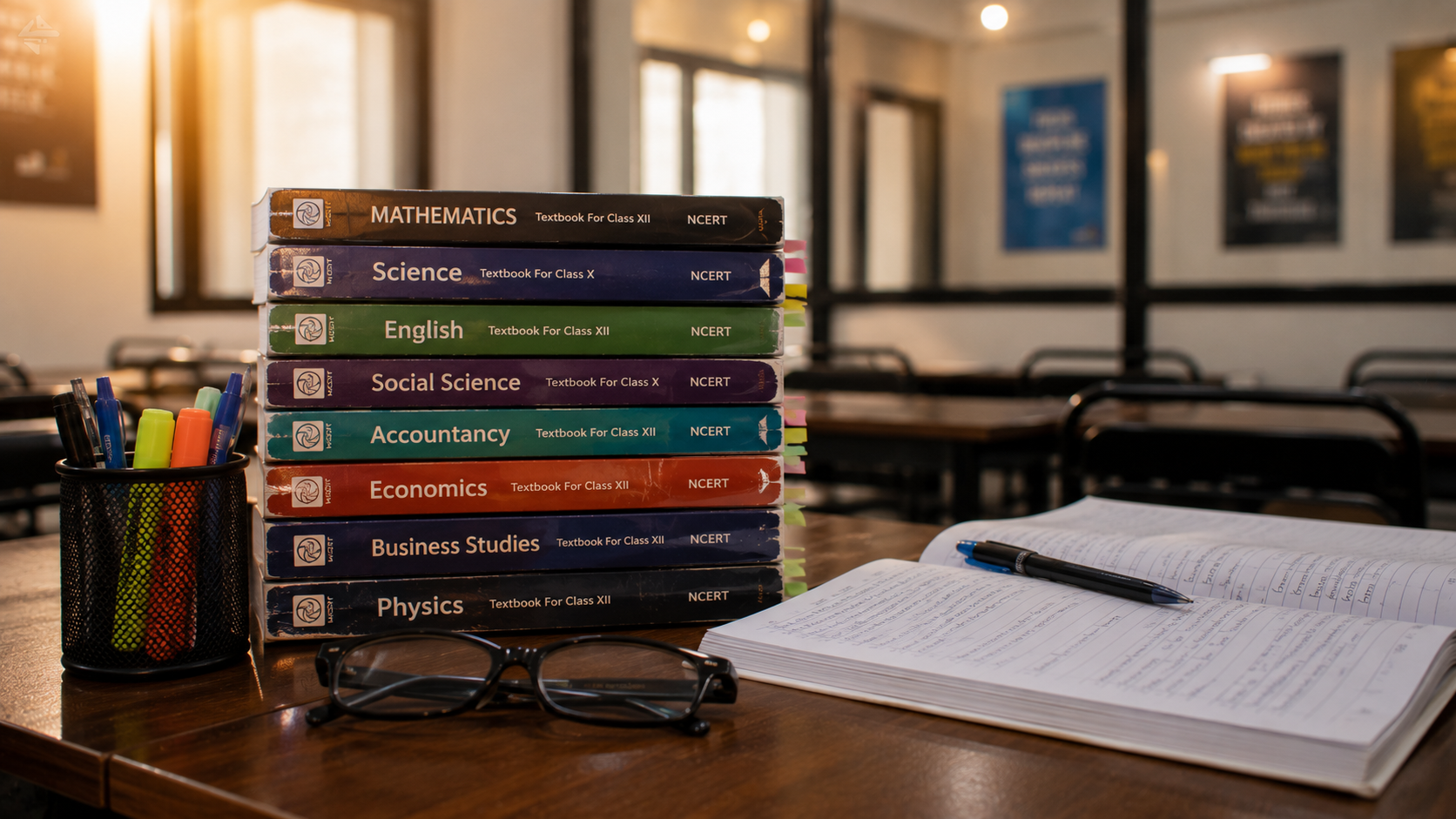
Expert Tutorials offers Commerce stream coaching at Class 11 and 12. The subjects are Accountancy, Economics, Business Studies, and Mathematics. Science stream is not offered at Classes 11 or 12 — the institute focuses exclusively on Commerce at the senior secondary level.
Praveen Singh personally teaches Business Studies and Economics for Classes 11 and 12. These are not outsourced to visiting teachers who rotate through. The founder teaches these subjects directly because he designed the curriculum and knows the CBSE pattern for each topic in depth.
For students coming from Class 10 into Commerce, both Accountancy and Economics introduce entirely new conceptual frameworks. The first month of Class 11 is the most critical — students who begin coaching from week one develop the conceptual foundation that makes the rest of the year manageable. Students who start mid-term consistently find themselves playing catch-up.
Would You Like to See This in Action?
The most reliable evaluation of any coaching centre is direct observation. Expert Tutorials offers a free demo class for all prospective students. You can attend as the student, as a parent observer alongside the student, or as a parent observer alone.
Observe whether the teacher checks individual understanding or just delivers content. Watch whether students ask questions freely or sit silently. Notice whether the classroom environment is engaged and disciplined or passive and distracted. That one observation is worth more than any conversation with the management.
Call or WhatsApp +91 97189 71838 to book a free demo class. Expert Tutorials is at Plot No. 153, Block B, Sector 8 Dwarka, New Delhi 110077. Open Monday to Saturday, 3:00 PM to 7:00 PM. Sunday closed.
Frequently Asked Questions
Found this useful? Share it.